Archive for September, 2007

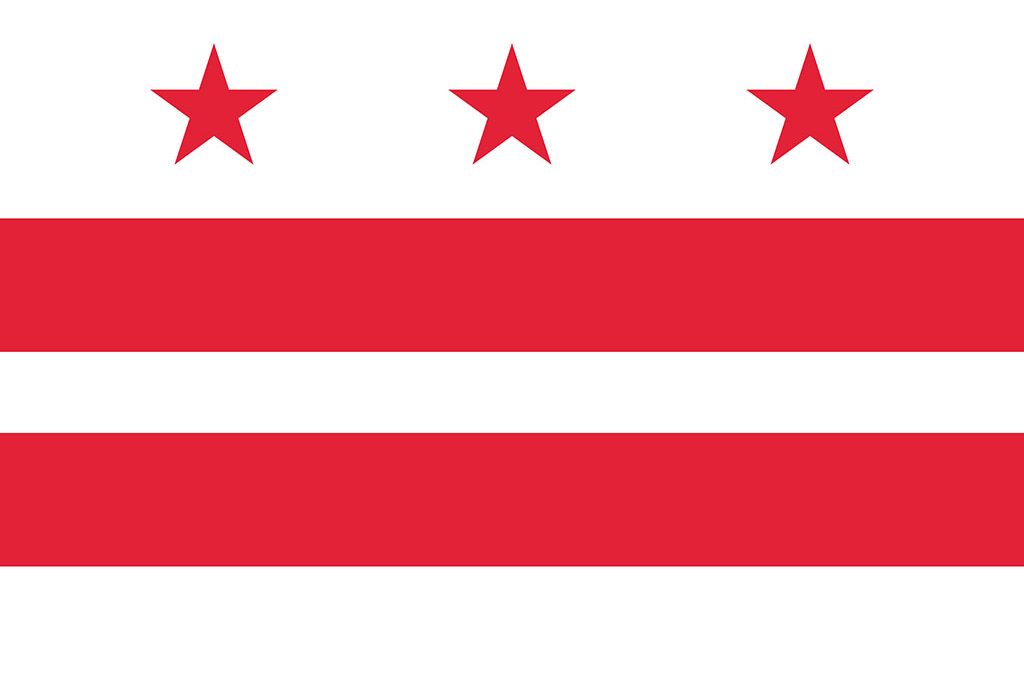
Restore Democracy in our Nation’s Capital


September 13th, 2007

Overview

On April 19, 2007 the D.C. Voting Rights Act (H.R.1905) passed the House of Representatives by a vote of 241-177. This is the first time in a generation that the House has passed a bill that works toward bringing voting representation to the 550,000 Americans living in our Nation’s Capital. Meanwhile, on May 1, 2007 Senators Joe Lieberman (I-CT.) and Bob Bennett (R-UT.), introduced the D.C. House Voting Rights Act (S.1257) in the Senate. On June 13, 2007 S.1257 passed in the Senate Committee on Homeland Security and Governmental Affairs with bipartisan support, by a vote of 9-1. With enhanced bipartisan support, S.1257 has enormous momentum and unequivocal majority support from Democrats and Republicans in the Senate. In spite of the Senate majority, 60 votes are required to avoid a filibuster. Historically, filibusters of equal rights legislation have been discredited (examine voting rights bills in the 1960s). A Washington Post poll, earlier this year, concluded that 61 percent of adult Americans support a House vote for the District. The support is not surprising because District residents have fought in every American war and rank second in per capita income taxes paid to support our Democracy. Similar to the reauthorization of the 1965 Voting Rights Act (2006), the D.C. Voting Rights Act would give a House vote to a majority African-American jurisdiction. According to Congressional scholars, the United States Congress has the vested and legitimate authority to grant voting rights to the District of Columbia.

Legislative Intent

The D.C. Voting Rights Act was crafted as a political compromise and is politically neutral. Under this legislation, the District of Columbia would get a House vote for the first time in 206 years, and Utah would get the seat it was denied because of counting irregularities in the 2000 Census. This historic legislation would ensure that the approximately 550,000 Americans in the District of Columbia as well as the residents of Utah are properly represented in Congress. As noted, Congress as a separate entity has always had jurisdiction over civil rights for the residents of the District of Columbia. Congress abolished slavery in the District nine months prior to the Emancipation Proclamation; segregated public accommodations and schools until the Brown decision in 1954; and prohibited home rule for the District to govern itself until 1974. To this end, Congress has remedied these and other inequities through its constitutional authority pertaining to all matters related to the District of Columbia. The Supreme Court asserts that this power is “full and unlimited” and provides Congress with the wherewithal to grant the District voting rights in the House of Representatives.

Action Required

Please call the Capitol Switchboard to contact your Senators at 202-224-3121 and urge them to support the D.C. Voting Rights Act (S.1257). NASW believes that enactment of S.1257 will affirm the bedrock Democratic principles of this Republic. Social Workers do not contend that this nation’s Founders would have systematically denied representation to the residents of the new capital they established. Continued disenfranchisement of District of Columbia residents is one of the most blatant violations of an imperative civil right, which is the unabridged right to vote

Contact: Lawrence Moore, III at (202) 336-8289

NASW Co-Signs Letter on HEA


September 7th, 2007

There is a bill to reauthorize the Higher Education Act now before a committee of senators and congressman. They are negotiating the differences between the House version and Senate version. The House version would provide up to $5,000 in college loan forgiveness for up to five years of work in the child welfare field. NASW recently cosigned the letter below with the Child Welfare League of America.

Dear Conferee:

The undersigned organizations are pleased that the House and Senate “College Cost Reduction Act of 2007 ” bills put greater attention on the need for providing loan forgiveness for individuals who participate in important public service careers. As you craft a final conference agreement we urge you to include in the final bill the sections 131 and 132 in the House version of HR 2669 to ensure that child welfare workers with a degree in social work or related field will receive a limited amount of loan forgiveness after being employed in public or private child welfare services.

A quality child welfare workforce is essential to promoting good outcomes for children in the child welfare system. No issue has a greater effect on the child welfare system’s capacity to serve at-risk and vulnerable children and families than the shortage of a competent, stable workforce. This shortage affects agencies in every service field, including foster care, adoption, child protective services, child and youth care, social work, and support and supervision. The timely review of child abuse complaints, the monitoring and case management of children in foster care, the recruitment of qualified adoptive and foster families, and the management and updating of a modern, effective data collection system that can result in greater and more effective research all depend on a fully staffed and qualified child welfare workforce.

The U.S. Government Accountability Office (GAO) documented this crisis in the child welfare workforce. The GAO report (GAO-03-357) found that workforce problems limit states’ ability to meet the goals established in the congressionally mandated Child and Family Service Reviews (CFSRs), and stated that the analysis of the CFSRs “corroborates caseworkers’ experiences showing that staff shortages, high caseloads, and worker turnover were factors impeding progress toward the achievement of federal safety and permanency outcomes.”

This provision will provide incentives for more caseworkers to work in the child welfare field, will help reduce the rate of turnover and help reduce caseloads. We believe that the building block to improving our child welfare system is a strong child welfare workforce. We hope you will give this issue a high priority and we urge you to make sure that this House provision as included in Section 131 is a part of the final Conference Report.

Thank you for considering these essential provisions.

John Sciamanna
CoDirector,Government Affairs
Child Welfare League of America

Get Loan Forgiveness for Social Workers in the Head Start Bill!


September 7th, 2007

On June 19, 2007, the U.S. Senate approved its version of the Head Start for School Readiness Act. This bill reauthorizes the Head Start Act and expands access to the Head Start program through increased appropriation levels. This program, which provides assistance to low-income children and families, has been an important part of America’s effort to promote school readiness and ensure that all Americans are able to receive the education that they deserve.
This week, the U.S. House of Representatives and the Senate are negotiating the details of their proposals and a compromise bill should emerge soon for the president to sign. The Senate bill differs from the House passed version with respect to loan forgiveness.  The House version, which passed on May 2, 2007, provides professionals with a Bachelor’s degree in early childhood education up to $10,000 in loan forgiveness if they work for a Head Start program for three consecutive years. The Senate version does not contain this provision, nor does it specify that social workers can benefit from the loan forgiveness program.

Action Needed:

Please call your Representative and Senator today at (202) 224 – 3121 and urge them to include loan forgiveness for social workers in the conference agreement and inform them of the important role that social workers have in supporting children and families in the Head Start Program.