
NASW Social Justice Brief urges social workers push to end solitary confinement, offers guidance to help inmates

Mar 9, 2016

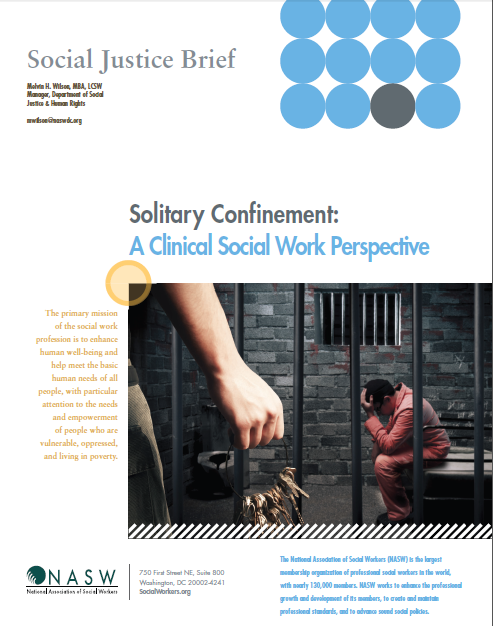
Report cover

Report cover

On any given day 80,000 to 100,000 inmates in U.S. prisons, jails or juvenile detention facilities are in solitary confinement.

The practice can cause long-term damage to the mental health of inmates.

This Social Justice Brief from the National Association of Social Workers (NASW), Solitary Confinement: A Clinical Social Work Perspective, offers and overview of this issue. It urges social workers to advocate to end this destructive practice but also offers guidance on how social workers can help inmates who are currently in solitary confinement or have experienced it.

For more information on this issue contact NASW Social Justice and Human Rights Manager Mel Wilson at mwilson@naswdc.org.


3 Travel Tips That May Improve Mental Health

3 Travel Tips That May Improve Mental Health

Merely the thought of traveling can be anxiety-inducing. Turbulent flights, lost luggage, foodborne illnesses, and catfished accommodations are horror stories just waiting to be told.   

Stop Spiraling Out of Control

Stop Spiraling Out of Control

In her powerful memoir Building a Life Worth Living, Marsha M. Linehan takes readers on her journey from being a suicidal teenager to a noted psychologist. Linehan created the ground-breaking Dialectical Behavior Therapy (DBT), which was originally developed to treat Borderline Personality Disorder. Today, experts say the DBT method is used to treat a broad range of mental health challenges from anger management to Post-Traumatic Stress Disorder.

Categories