By Jaimie Seaton
In May 2023, social isolation and loneliness were declared an epidemic. The declaration, made in a report from the U.S. surgeon general at the time, Dr. Vivek M
It would be logical to attribute the findings in the report to the COVID-19 pandemic, which officially began in the U.S. in March 2020, prompting stay-at-home orders across the country. With millions of Americans working remotely, attending school virtually and limiting nonessential movement outside the house, it’s little wonder that the country collectively would have been experiencing cabin fever by 2023.
But the data in the 2023 report actually came from a study published in 2010.
The fact is, Americans were socially isolated and lonely long before COVID; the pandemic simply made people more physically isolated. But physical isolation is just one part of the equation. And here’s something else to consider: Not all physically isolated people are lonely; some are happy in their isolation. Likewise, not all lonely people are physically isolated.
As Murthy warned, there are serious personal health effects of loneliness and unwanted isolation. There also are harmful societal effects, including devastating violence. The turbulence of the past few years and deep polarization of the country has further exacerbated the problem — but it is not intractable.
Policymakers, individuals, community organizations, schools and social workers all have an important part to play in reducing harm to the people experiencing loneliness and isolation. And experts agree that loneliness and isolation are societal problems that cannot be ignored.
Loneliness Can’t Be Cured With More Social Media Clicks
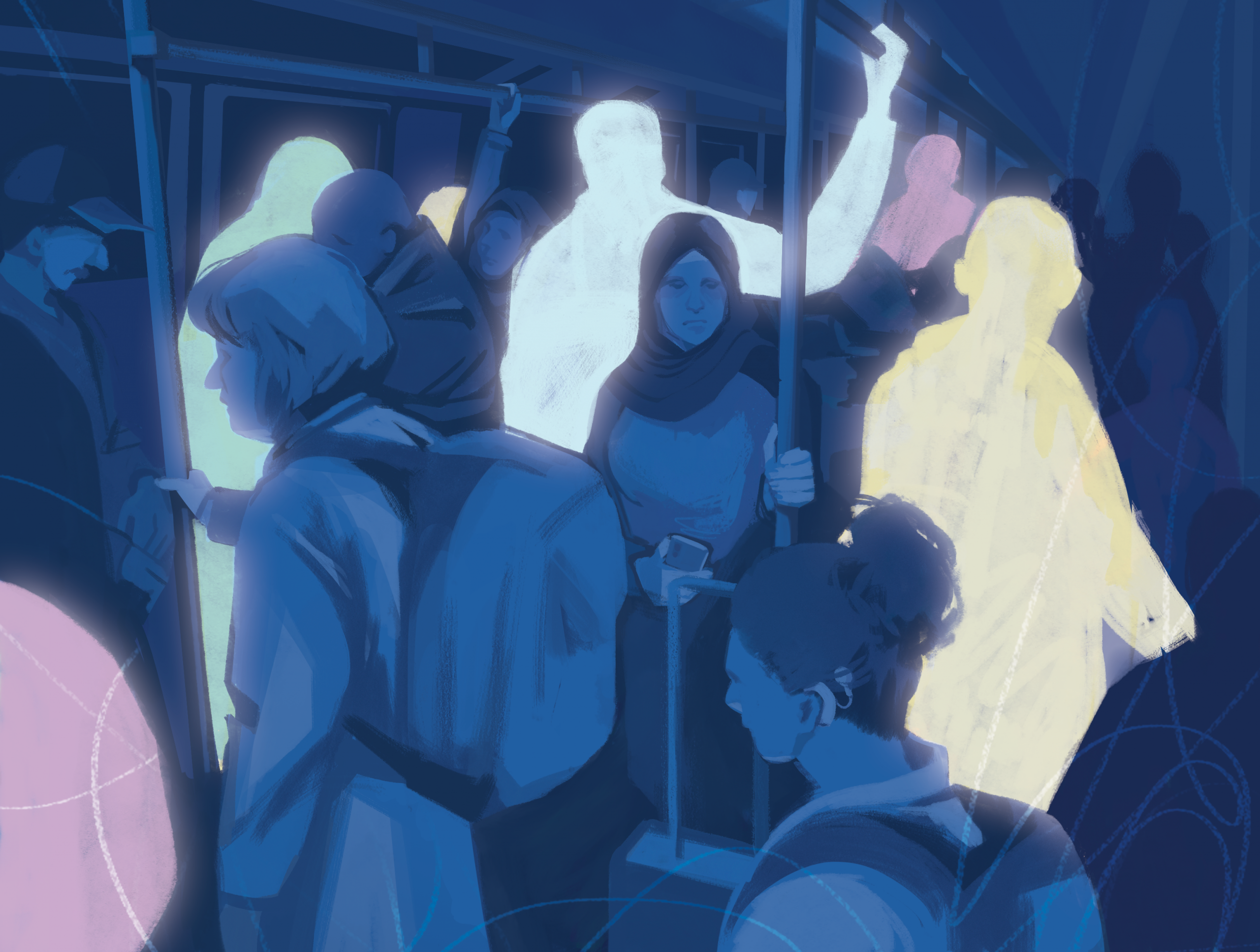
Anyone who has ever felt lonely in the middle of a crowded party understands that loneliness isn’t necessarily connected to the number of people in your life. Similarly, if it were possible to see every person on the planet who was physically alone, you couldn’t tell how many of them were lonely.
“Social isolation is a form of being alone; you can count the number of social contacts you have. Being lonely is completely subjective. It’s how you feel about the world around you and your relationship to it from a social perspective,” says Jeremy Nobel, MD, MPH, a longtime faculty member of Harvard Medical School, the Harvard T.H. Chan School of Public Health, where he teaches a highly sought-after course on loneliness.
“That makes loneliness harder to measure, harder to get people to talk about or understand, harder for social workers or anybody else on the front lines to recognize. Social isolation is easier. You can just ask people, ‘How many other people do you see in a typical day or week?’ and they’ll tell you. But if you ask them if they’re lonely, they often feel embarrassed and ashamed. So, they minimize it,” says Nobel, who also is the author of “Project UnLonely: Healing Our Crisis of Disconnection.” However, according to Noble, we are making progress as a society in that regard, and younger people are more willing to talk about their loneliness. “Sometimes I compare the stigma around loneliness and talking about it to where depression was 25 years ago,” he said.
Antoinette Shine, LCSW, who works with families and individuals in NYC, is seeing a similar pattern. “For some, loneliness is an entirely new experience, and for others it’s not new but is manifesting in new ways.” She also notes that over the past five years, “more men are coming in — not because they are necessarily more lonely, but because seeking help has become more normalized.”
Read the full story in the NASW Social Work Advocates magazine.