
 Two major policy and legal decisions on immigration in the United States have been issued in the past two weeks.
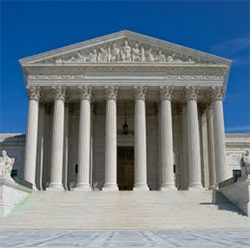
The first was the June 15 Obama administration’s policy directive to stop deportations of many children and young adults of undocumented parents. The second was the June 25 Supreme Court decision which effectively struck down much of the state of Arizona’s immigration policy that many saw as being excessive in its scope.
The Court’s ruling had the following elements:
- The U.S. Supreme Court struck down key parts of an Arizona law Monday that sought to deter illegal immigration, but it let stand a controversial provision, Section 2(B), that requires police to check a person’s immigration status while enforcing other laws.
- In striking Arizona’s attempt to criminalize work by undocumented immigrants the Court clarified that federal law instead imposes civil penalties that may lead to removal and reiterated that “Congress decided it would be inappropriate to impose criminal penalties on aliens who seek or engage in unauthorized employment.”
- The Court’s 5-3 ruling upheld the authority of the federal government to set immigration policy and laws. “The national government has significant power to regulate immigration,” Justice Anthony Kennedy wrote in the majority opinion. “Arizona may have understandable frustrations with the problems caused by illegal immigration while that process continues, but the state may not pursue policies that undermined federal law.”
- The Supreme Court concluded that federal immigration law preempts the Arizona law — known as S.B. 1070. Yet the court let stand one of the most controversial parts of the bill — a provision that required police to make “reasonable efforts” to check a person’s immigration status while enforcing other laws if a “reasonable suspicion” exists that the person is in the United States illegally. It also mandates a determination of immigration status for those who are arrested.
The Court indicated that depending on how Section 2(B) is implemented, later legal challenges could be anticipated.
NASW also will continue to advocate for fair enforcement of Section 2(B) so that individuals are not detained “solely to verify their immigration status” and that prolonged detention of individuals does not occur while Arizona verifies immigration status.
The NASW Code of Ethics was amended in 2008 to ban discrimination by social workers on the basis of an individual’s immigration status. NASW applauds the Supreme Court’s holding that federal immigration laws supersede Arizona’s law and will be monitoring the impact on pending legal challenges to other states’ legislation, such as Alabama’s H.B. 56, which imposed punitive anti-immigrant measures.
NASW’s Legal Defense Fund facilitated NASW’s participation in amicus curiae briefs in legal challenges to Arizona’s and Alabama’s laws.
NASW Amicus Brief in 9th Circuit Court of Appeals (United States v. Arizona)
NASW Amicus Brief in Hispanic Interest Coalition of Alabama v. Bentley (H.B. 56 case)