On May 31, 2011, the state of Oregon passed House Joint Memorial 13 urging Congress to support the Dorothy I. Height and Whitney M. Young, Jr. Social Work Reinvestment Act (H.R. 1106/S. 584). This measure was passed overwhelmingly with a vote of 58-2 in the House and 28-1 in the Senate.
In Oregon, a study showed that those graduating with a social work degree between 2000-2008 graduated with a median of $38,000 in educational debt. However, the median annual income for these recent graduates was only $33,000. In the same study, it was also shown that 21.4% of Oregon social workers intended to leave the social work field within the next 3-5 years, and 74.3% of respondents would consider changing jobs.
The Social Work Reinvestment Act would create a Social Work Reinvestment Commission to review these workforce challenges which prevent recruitment and retention in the profession. It would award grants to address high educational debt and caseloads, low salaries, and safety issues on the job, as well as promoting social work research to influence practice methods. The overall goal of the legislation is to improve working conditions and increase retention in the social work profession so that clients can have their needs met.
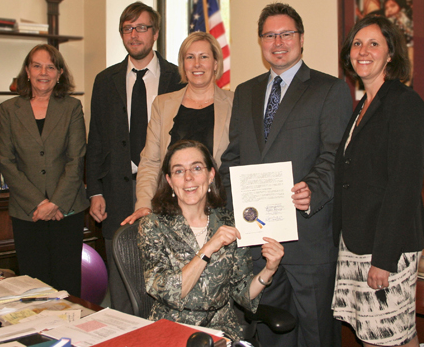
Below is a photo taken with Kate Brown, Oregon Secretary of State, and members and staff of the Oregon NASW chapter celebrating their success on filing the joint memorial.
Congratulations to Oregon on their success! What kinds of achievements are other states and chapters having as they seek to reinvest in the social work profession?