 An important part of a social worker’s professional responsibility is to manage conflict in a productive manner. Whether advocating for clients, dealing with conflict within organizations, or resolving conflict employment settings or in the delivery of services to clients, social workers involved with conflict resolution daily.
Social workers are increasingly compelled to follow disputes into court, but the courtroom can be both costly and time consuming, sometimes taking years for the simplest case to go to trial. Increasingly, the practice of resolving disputes in the courtroom is being replaced or assisted in many areas by alternative dispute resolution (ADR) processes. The courts, state and federal agencies, and employers have all begun providing private and less adversarial methods of dispute resolution than litigation.
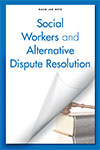
Social Workers and Alternative Dispute Resolution is part of a series of General Counsel Law Notes written with the support of the NASW Legal Defense Fund. This law note describes three methods of voluntary ADR—negotiation, arbitration, and mediation—and discusses the uses for these methods in the social work profession, including the use of mediation in the resolution of NASW Code of Ethics violations.
This law note also provides answers to the following questions:
- In what areas do social workers practice as mediators?
- What are the ethical issues for social workers as mediators?
- How are ADR agreements enforced?
Some of the material covered in Social Workers and Alternative Dispute Resolution includes:
- ADR and What It Encompasses
- Becoming a Mediator
- Areas in Which Social Workers Practice as Mediators
- Collaborative Divorce
- Ethical Issues for Social Workers as Mediators
- ADR and the NASW Ethics and Professional Review Process
- Enforcement of ADR Agreements