
By Ja’Bree Harris, MSW, NASW Public Policy and Advocacy Manager
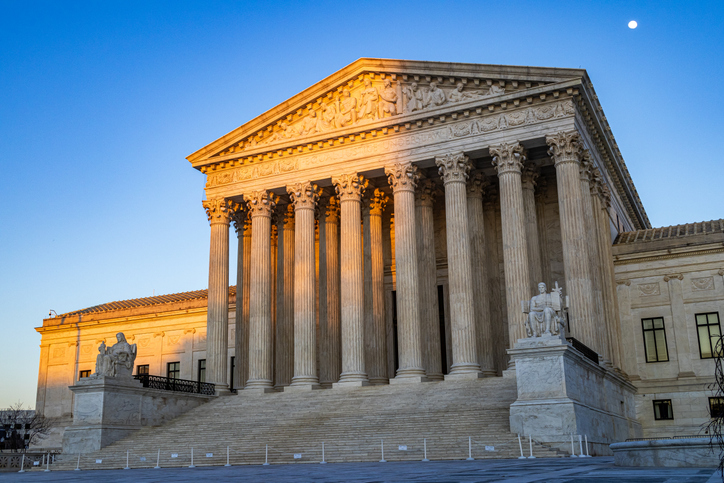
Today is the anniversary of the landmark Supreme Court decision in Brown v. Board of Education. The National Association of Social Workers (NASW) is celebrating the advocacy and hard work that led to this pivotal decision, which has greatly influenced our nation. Seventy years ago, the Court unanimously ruled that “separate but equal” has no place in public education, fundamentally changing the civil rights landscape in the United States.
The decision to desegregate schools helped ignite the modern civil rights movement and served as a beacon of hope and progress for generations. It emphasized that every child, regardless of race, creed, or color, has the right to equal educational opportunities, a principle that aligns with NASW’s core ethical values of social justice and equality.
As social workers, we understand that education is a crucial pathway to opportunity and empowerment. The Brown v. Board of Education case established the precedent for the ongoing battle against systemic racism and inequality in all areas of society, including the educational system.
As we commemorate the 70th anniversary of Brown v. Board of Education today, it’s disheartening to see that many schools across the country still have predominantly single-race student bodies. Schools remain divided along racial, ethnic, and economic lines throughout the United States – even as the K-12 public school student population grows more diverse.
While we recognize the progress made over the last seven decades, we cannot ignore the remaining challenges or negative consequences of this landmark decision. The journey toward achieving true equity in education is far from complete. Disparities in funding, resources, and access to quality education persist, disproportionately impacting students of color and those from low-income backgrounds and communities.
As social workers, it is our responsibility to be advocates for change, promoting justice and equity for our clients and communities. NASW supports policies that aim to achieve educational equity and justice. Unfortunately, there has been a rise in attacks on diversity, equity, and inclusion efforts, which pose a threat to whitewash U.S. history and ban books about race. Supreme Court decisions have made it difficult to promote race-conscious integration. NASW stands behind initiatives that address educational disparities and create inclusive, supportive environments for all students.
Today, we pay tribute to the bravery of those who fought for the ruling in Brown v. Board of Education and recommit ourselves to breaking down barriers that hinder equality. Let’s take a moment to recognize the progress we’ve made and pledge to continue the necessary work ahead.
Together, we can build a future where every child has the opportunity to thrive, free from the constraints of systemic injustice and inequality.
Resources:
NASW Practice Ethnicity and Race webpage
 Ja’Bree Harris is the public policy and advocacy manager at NASW. Previously, the Detroit native was national community organizing manager for the Democratic National Committee and civic engagement manager and deputy field director for Detroit Action. Ja’Bree earned a master’s degree in social work from Howard University and a bachelor’s degree in social work from Eastern Michigan University. Follow him on X @JaBreeHarris.