
 In today’s society, adolescents are faced with several life-changing challenges—peer pressure, bullying, alcohol and drug abuse, diseases, and engaging in various sexual behaviors. Yet often adolescents are ill-equipped to face these challenges. Substance abuse in particular affects many communities and families. In recent decades, younger people are increasingly involved in use and abuse of alcohol and drugs. Furthermore, substance abuse has been linked to aggression and violence. Yet, the treatment approaches to address substance use disorders in adolescents have remained unchanged and incomplete. In fact, the historic treatment approaches have frequently been punitive and threatening, with the goal of scaring adolescents into not using substances. Unfortunately, these approaches have failed.
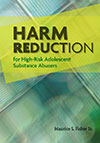
To address the need for updating treatments for adolescent substance abuse, Maurice S. Fisher has written Harm Reduction for High-Risk Adolescent Substance Abusers. In the book, Fisher shares his experience of helping adolescent clients take charge of their life after negative consequences of substance use or abuse, and empowering young men and women to make better choices and minimize risky behaviors, using harm reductive methods.
Harm reductive methods are used for adolescents who are at higher risk for aggression and violence during three phases: while obtaining the drugs, during active use, and during withdrawal from the substances. Fisher explains harm reduction as an evidence-based method that concentrates on behavior modification and refrains from making moral judgments. He recognizes abstinence-only programs as unrealistic, moral value-laden frameworks based on dishonesty and simplification. It is not the substance use, but rather the physical, psychosocial, emotional, and often legal consequences of use that lead to terrible consequences among adolescents.
Fisher explains:
Harm reduction methods and techniques serve the sole purpose of decreasing the risk and threat of aggression and violence to people having substance use disorders as well as to society at large. Harm reduction methods, therefore, are highlighted as a progressive way to address both substance use and aggressive and violent behaviors.
Harm Reduction for High-Risk Adolescent Substance Abusers provides the research, discussion, and specific clinical techniques that can be used in private practices. Cognitive-behavioral therapy and skill development, psycho-educational and interpersonal skills, anger management and support group therapies are discussed, as are ethical issues that may come up in practice.
The book serves as a good resource for therapists, counselors, and clinicians to help adolescents who have lost control and are signaling for help to get their life back on track and grow into adulthood as successful members of society.