Animal-Assisted Crisis Response: Specialized Canine Intervention for Individuals Affected by Disasters and Crises edited by Yvonne M. Eaton-Stull
Animal-assisted crisis response (AACR) is a unique and proven intervention following crises and disasters. AACR teams are specially skilled, trained, and evaluated handlers 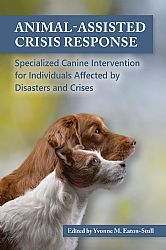 with therapy dogs deployed after myriad incidents, including natural disasters, school or other mass shootings, terrorist attacks, and suicides, and also in nonemergency programs such as grief camps for children and memorial services for community traumas.
Through detailed case studies written by certified crisis dog handlers, this book demonstrates how each AACR presents its own unique challenges and opportunities. The authors discuss the intersection of psychological first aid (PFA) and AACR, offering canine-based techniques that can be incorporated into PFA and all trauma-informed care.
Human–Animal Interactions: A Social Work Guide by Janet Hoy-Gerlach and Scott Wehman
Animals—whether as household companions, therapy animals comforting those in need, or highly trained service dogs supporting people with disabilities—occupy important positions in the lives of many individuals and their larger communities. Despite increasing recognition of the relevance of human-animal interaction (HAI) to social work practice, the topic remains largely ignored by many educational and training programs. As a result, the significant roles that animals can play in human interventions are often overlooked.
The book begins with a detailed overview of HAI, analyzing its history; extensive biological, physiological, and social benefits; and associated risks and ethical concerns. Relational aspects of HAI are also considered, including the role of companion animals in family systems, the loss of companion animals, and the various contexts in which social workers may have to confront and address violence toward animals. The varying therapeutic roles of animals and related practice guidelines are delineated and discussed. The book concludes with an exploration of HAI specialization areas within social work practice, including veterinary social work, practice within humane societies, and other emerging areas.
________________________________
For more information about all NASW Press titles, including books, eBooks, CEU books, reference works, journals, brochures, and standards, visit the NASW Press website. If you have questions please send an email to NASWPress@BrightKey.net or call 1-800-227-3590.
_________________________________
You Might Also Be Interested In . . .
 The NASW Code of Ethics is a set of standards that guide the professional conduct of social workers. The 2021 update includes language that addresses the importance of professional self-care.
Moreover, revisions to the Cultural Competence standard provide more explicit guidance to social workers. All social workers should review the new text and affirm their commitment to abide by the Code of Ethics.
The Code of Ethics is also available in Spanish.