By Marisa Markowitz, LCSW, CASAC, C-DBT
There are trips that simply take you to a new place, and then there are trips that immerse you fully – body, mind, and spirit – into an environment that shifts something inside you. My recent six-day, five-night trip to Belize with Surf Yoga Beer firmly belongs in the latter category. What began as a vacation quickly unfolded into a uniquely therapeutic, communal, and restorative experience – one that aligned beautifully with the biopsychosocial model that we use in social work to understand overall well-being.
I traveled with 25 strangers who rapidly became 25 friends, each from different cities across the United States, each bringing their own story, their own energy, and their own reason for being there. Together, we built a temporary little ecosystem – one filled with laughter, sweat, shared meals, salty hair, vulnerability, adventures, birthday celebrations, and more sunlight than my serotonin levels knew what to do with.
By the end of the week, I realized that this trip was not just a getaway. It was a living, breathing demonstration of what it means to care for ourselves physically (bio), mentally (psycho), and socially (social). Surf Yoga Beer created a structure – workouts, yoga, shared meals, group events – that quite literally reinforced what I try to teach clients every day: that holistic wellness emerges when these three dimensions are intentionally nurtured.
Below is a reflection on how this Belize trip brought the biopsychosocial model to life.
Arrival: Stepping Into Sunlight and Community
The moment we arrived in Belize, the atmosphere shifted. There is something about stepping off a plane into warm tropical air that immediately signals to the nervous system: You can let go now.
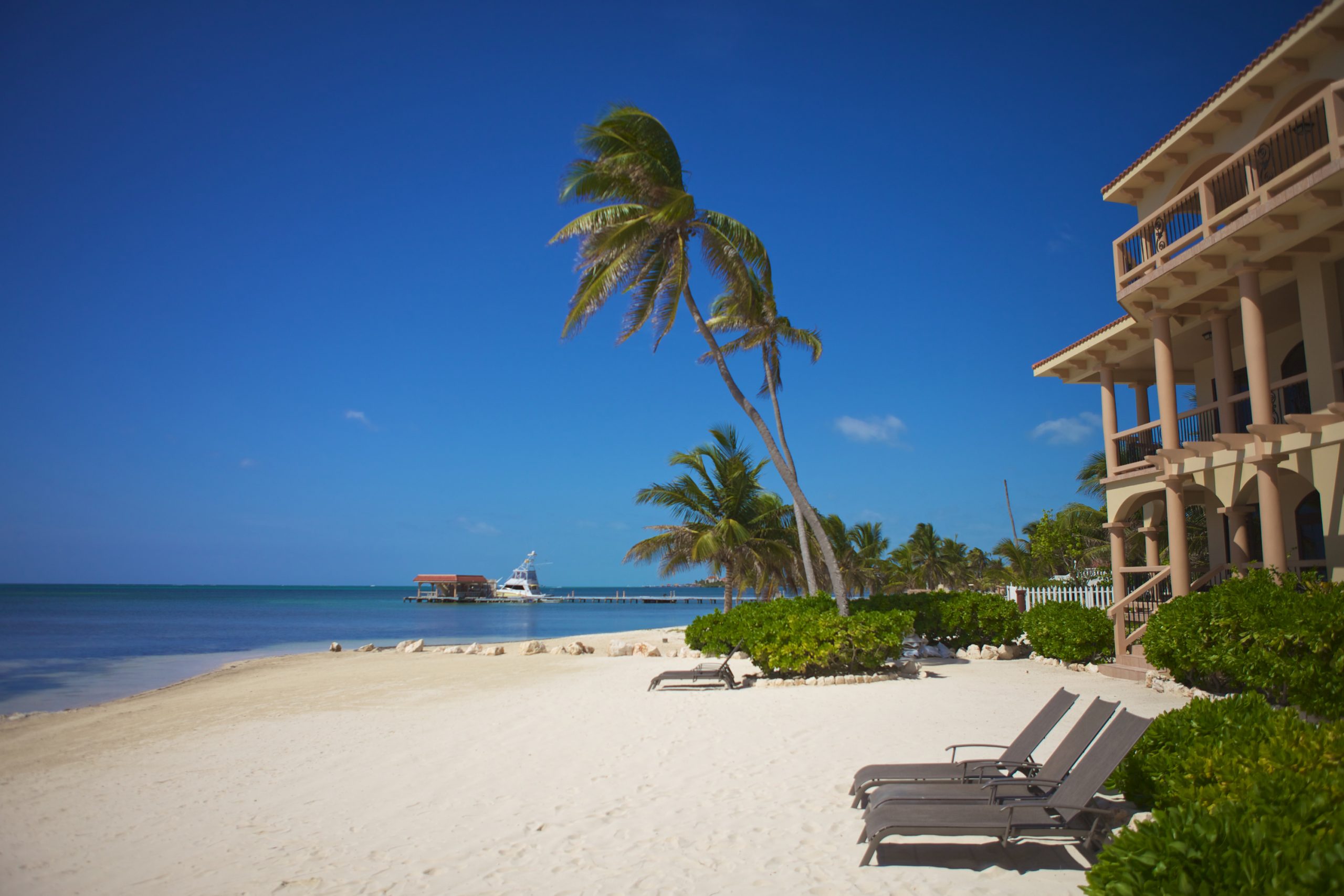
We met the Surf Yoga Beer leaders at the hotel – instantly recognizable with their energy, warmth, and ability to make a group of strangers feel like a pre-existing friend circle. Our home base for the week was a sun-soaked mix of ocean views, pool lounging, tropical foliage, bright colors, and that unmistakable scent of sunscreen mixed with sea breeze.
From the very beginning, there was intentionality behind how the group was oriented. Introductions, name games, and early icebreakers were seamlessly woven into the start of the experience – not forced, not clinical, but gently facilitating connection. In Social Work, we call this rapport building, but here it simply felt like the first moments of a big summer camp for adults. Within hours, people were chatting like they had known each other for years.
And for me, arriving at the start of my birthday week felt especially symbolic. Instead of my usual routine of celebrating with familiar friends and familiar settings, I found myself surrounded by new faces, new energy, and a new environment – all of which became part of the celebration.
The Biological: Moving the Body, Regulating the Nervous System
The “bio” component of the biopsychosocial model refers to how we care for our physical selves: movement, sleep, nutrition, and bodily regulation. Surf Yoga Beer facilitates this effortlessly because physical activity is built into the structure of the trip.
Every morning, just after sunrise, we gathered by the water for a group workout. Some days it was strength training; other days it was circuit work or cardio bursts. The workouts were challenging but empowering – accessible enough for all fitness levels but structured enough to leave everyone glowing with accomplishment.
There’s a powerful therapeutic effect to these early workouts. Physiologically, morning exercise releases endorphins, stimulates cortisol regulation, and activates the parasympathetic nervous system. Psychologically, beginning the day with something physically demanding gently reorients the brain toward competence: I can do hard things.
As a therapist, I often emphasize that movement is one of the most underutilized anxiety interventions. In Belize, movement wasn’t an afterthought – it was a daily ritual. A grounding. A reset.
Yoga: The Mind–Body Bridge
 Yoga, for me, was the bridge between the biological and psychological realms. The classes were held outdoors, framed by palm trees and ocean waves. Even the act of unrolling a mat on warm Belizean sand creates a shift in internal rhythm.
Yoga classes emphasized breathwork, intentional movement, and mindfulness. There’s a clinical elegance to yoga – each posture inviting awareness, each hold asking for tolerance, each transition modeling flexibility. These sessions encouraged participants not just to stretch their muscles, but to expand their internal capacity for presence.
In therapy, I talk often about interoception – the awareness of internal sensations. Yoga nurtures this skill, making it a potent adjunct to anxiety management and emotional regulation.
Sun, Ocean, Rest: Healing Through Environment
A significant portion of the biological wellness we experienced came from simply being outside – sunlight warming our skin, ocean water rinsing off stress, salt air deepening our breath.
Vitamin D alone increases serotonin production. Warmth relaxes muscles. Swimming activates the vagus nerve in gentle, regulating ways (the vagus nerve oversees involuntary functions such as digestion and breathing). Research consistently shows that time in nature reduces cortisol levels.
The long afternoons spent in the ocean, the pool, or lounging under palm trees were not laziness – they were nervous system recalibration.
And somewhere between snorkeling with coral reef fish and floating under the sun, I could feel my body fully exhale.
The Psychological: Mindfulness, Play, Novelty, and Joy
The “psycho” facet of the biopsychosocial model looks at cognitive, emotional, and psychological functioning – including coping skills, mindset shifts, and opportunities for self-reflection or challenge. This trip offered all of those – not in the form of worksheets or clinical interventions, but through experiential learning.
Each yoga session reminded me of the psychological skills I teach clients: mindful breathing, nonjudgmental awareness, radical acceptance, and grounding. It’s one thing to instruct someone on the benefits of mindfulness; it’s another to practice those skills yourself while staring out at turquoise water.
The teachers often incorporated short guided meditations at the end of classes. Whether focused on gratitude, breath, or self-compassion, those moments served as psychological recalibration points throughout the week.
Adventure as Cognitive Expansion
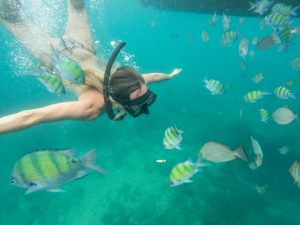 Trying new things -snorkeling, boat excursions, unfamiliar workouts – stimulates neuroplasticity. There’s something psychologically significant about novelty: it disrupts habitual thought patterns and invites presence.
Snorkeling, for example, requires full attention – breathing rhythmically through a snorkel, observing schools of fish, watching rays glide under you. Adventure is its own meditation. For anxious people especially, being engaged in something sensory, active, and new can quiet internal noise.
Adults also do not play enough. Yet play is deeply therapeutic. It invites spontaneity, laughter, creativity, and vulnerability—all things that decrease psychological rigidity.
Surf Yoga Beer builds play into the itinerary:
- A boat day with music, sun, and dancing
- A white party
- A tropical-themed party
- Group dinners
- Silly games
- Shared jokes that became running group memes
Play is not frivolous; it is a form of emotional release. And in Belize, play became a shared language among 25 strangers.
Birthday Joy: Receiving Instead of Giving
Spending my birthday with this group added a unique layer of emotional resonance. Birthdays for adults are often low-key or predictable. But here, surrounded by new friends, new experiences, and a supportive environment, my birthday became a celebration of presence and connection.
To allow myself to receive – to accept joy, kindness, attention, and warmth – was its own psychological practice.
The social dimension of the biopsychosocial model examines relationships, communication, engagement, and sense of community. This trip excelled in that arena. Surf Yoga Beer is intentionally structured to foster social connection in a way that feels authentic rather than forced.
Shared Meals: Communal Nourishment
One of the most underrated social interventions is the act of eating meals together. Each day, we gathered for group breakfasts, lunches, or dinners. Sometimes at the hotel, sometimes at local Belizean restaurants, and sometimes during special events like boat day.
Sharing meals encourages:
- Conversation
- Eye contact
- Bonding
- Mutual support
- Laughter
These communal dining experiences quickly transformed strangers into friends. You learn a lot about someone when you sit across from them at a long table lit by sunset, eating fresh seafood while sweat still dries from the day’s adventures.
Structured Activities as Social Glue and a Safe Space to Be Ourselves
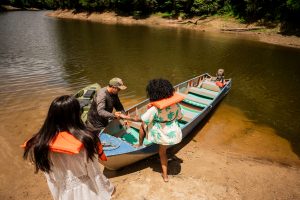 Group workouts, yoga, boat day, themed parties, and excursions all acted as scaffolding for socialization. People bonded over shared effort, shared discomfort (burpees in 85-degree weather will do it), shared fun, and shared beauty.
Every day, the social fabric of the group thickened—threads of conversation weaving into threads of humor, weaving into threads of trust.
What stood out was how quickly a sense of psychological safety emerged. People felt comfortable showing up authentically – talking about their lives, their careers, their hopes, their stressors. There’s something about being away from home, away from routine, that reduces defensiveness.
The group dynamic embodied something I often describe clinically: healthy interdependence. Everyone maintained their individuality while contributing to a collective experience.
Connection as an Antidote to Anxiety and Integrating the Biopsychosocial Model in Real Time
Social connection is one of the most powerful predictors of emotional well-being. This trip, by design, eliminated loneliness. Even introverts found it easy to connect because activities had natural entry points for conversation.
By the end of the week, we were less like a group of individuals and more like a small community.
What made this trip particularly rich from a clinical perspective was how seamlessly the “bio,” “psycho,” and “social” elements integrated each day. The model wasn’t theoretical – it was lived.
A typical day looked something like this:
BIO: Wake up and do a morning workout in the sun
PSYCHO:Transition into a grounding yoga session
SOCIAL: Eat breakfast with the group
BIO: Spend the afternoon swimming, snorkeling, or relaxing
PSYCHO: Allow the mind to unwind through meditation or play
SOCIAL: Dinner with new friends followed by a themed party
It was holistic wellness without ever labeling it as such.
Surf Yoga Beer has built a structure that mirrors what we encourage in therapy: consistent physical care, intentional mental care, and meaningful social engagement. And when these three areas are supported simultaneously, people flourish.
A Closing Reflection: Belize as a Blueprint for Well-Being
As the trip came to an end, I found myself reflecting on how rare it is to experience all three biopsychosocial domains thriving at once. Many people are strong in one or two areas but struggle with the third:
- Some people are physically active but socially isolated.
- Some are socially connected but mentally overwhelmed.
- Some are psychologically resilient but physically depleted.
This trip created an environment where all three components were nurtured organically.
I returned home with a renewed sense of vitality – a reminder that joy is a therapeutic tool, that play is essential, and that connection is healing. It was more than a vacation. It was a lived demonstration of balance, wellness, and humanity at its best.
Belize was beautiful, yes. But Surf Yoga Beer was the catalyst—the structure, the community, the energy that turned a trip into an experience.
As a therapist I came home with a professional reminder and a personal affirmation: when we nurture the biological, psychological, and social parts of ourselves, we don’t just function – we thrive.
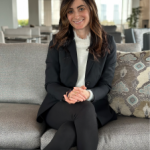 Marisa Markowitz (she/her) is a licensed psychotherapist practicing in New York.
Marisa specializes in EMDR, CBT, DBT, other evidence based modalities. Her area of expertise is addiction, with a focus on technology misuse.
Disclaimer: The National Association of Social Workers invites members to share their expertise and experiences through Member Voices. This blog was prepared by Marisa Markowitz in her personal capacity and does not necessarily reflect the view of the National Association of Social Workers.