By Jo Seiders, LCSW, CDE
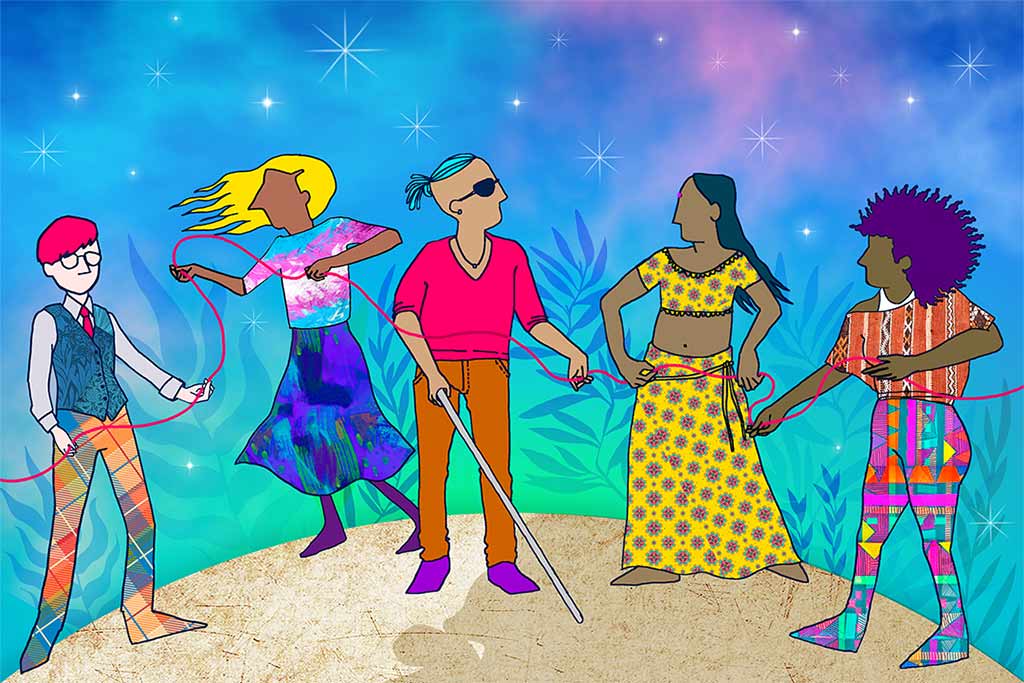
May 17 is recognized as International Day Against Homophobia, Transphobia and Biphobia, a day many people around the globe celebrate gender and sexual diversity — and collectively confront oppression, discrimination, intolerance, and violence that many LGBTQIA2S+ people experience daily.
The significance of May 17 is that on that day in 1990 the diagnosis of “homosexuality” was no longer recognized in the ICD 10 — the 10th revision of the International Statistical Classification of Diseases and Related Health Problems, a medical classification designated by the World Health Organization.
Over time it has evolved to become more inclusive in representation to also honor transgender, nonbinary, gender expansive, intersex, bisexual identities, differing characteristics and expressions. Some perceive it as an intersectional movement, and as many things in the queer+ community, there is no singular definition or representation nor is one necessary. Social workers honor those they work with as experts on their cultures.
As social workers represent the greatest volume of mental and behavioral health professionals, perhaps it makes sense for us to be leading conversations about whether using terminology such as homophobia, transphobia, intersexphobia, biphobia is best practice. The word “phobia” commonly has clinical and diagnostic associations and implications. Therefore, it seems reasonable to question the societal impact of using the word “phobia” when it is most commonly used to describe prejudice and intolerance that might be more accurately defined as heteronormativity and heterosexism.
Is this an opportunity for our profession to provide education as we take a nonjudgmental and dialectical stance when advocating in solidarity with those in the LGBTQIA2S+ community?
Social workers tend to be familiar with calls to action and recognize the importance of advocacy, social justice and its role in changing minds and policy. Education and awareness and ongoing commitment to growing as a professional are some of the reasons social workers empower others to break barriers.
Jo Seiders, LCSW, CDE, is the Senior Human Rights Policy Associate of Diversity, Equity & Inclusion for the National Association of Social Workers.