By Paul R. Pace, News staff
Social workers are the among the behavioral health professionals greatly needed to meet a growing demand for services, says the new leader of the Substance Abuse and Mental Health Services Administration, or SAMHSA.
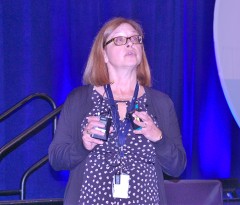
Elinore McCance-Katz
Dr. Elinore McCance-Katz is the assistant secretary for mental health and substance use. In the newly created position, she advises the Department of Health Human Services secretary on improving behavioral health care in America.
“We do not have nearly enough practitioners in behavioral health, be it psychiatrists, psychologists, social workers or counselors – we don’t have enough,” she said. “…. The bottom line (is), we need to try to get people into the field.”
To address the workforce shortage, McCance-Katz said she wants to help build national certification programs so trainings can be standardized, and also to promote student loan forgiveness.
McCance-Katz shared how SAMHSA will direct its efforts in upcoming years at the National Council for Behavorial Health’s Hill Day in Washington, D.C., in October. It is the largest behavioral health advocacy event of the year.
NASW was among 21 national advocacy organizations that partnered to support the conference. It gathers hundreds of behavioral health providers, including NASW members, consumers and community stakeholders for a day of sessions and workshops on federal behavioral health policy.
Hill Day attendees then take their message to Capitol Hill to advocate for better resources for mental health and addictions treatment in their communities.
McCance-Katz said her position is newly created by Congress under the 21st Century Cures Act.
One of her many duties is to work with other federal departments and agencies within HHS to best serve the American people with serious mental illness or serious emotional disturbances as well as substance abuse disorders, she said.
“We are a small agency with a small budget, but we have a big job,” she said. “We will focus on serious mental illness as a priority. That includes treatment and recovery services for people with the most serious illnesses and what they need to live productive lives.”
“For now, the opioid crisis will be the second, very big issue that will be the focus of SAHMSA,” she said.
From the November 2017 NASW News. NASW members may read the full story here.