 In case you missed it, here are some of the features in the latest issue of Social Work Advocates.
Top stories include:
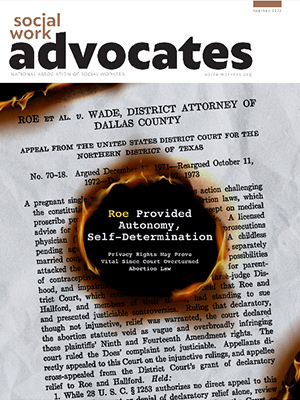
Roe Provided Autonomy, Self-Determination: Privacy Rights May Prove Vital Since Court Overturned Abortion Law
The Supreme Court’s decision to overturn Roe v. Wade creates a social justice priority for social workers — affecting not only social work clients but also how social workers do their jobs.
Inflation and Social Work
Many social work clients are hit hard by inflation. Social workers are using advocacy, empowerment, and resources to help them.
Life After Dobbs: Hyperlocal Organizing Starting Now
NASW-Massachusetts Executive Director Rebekah Gewirtz says hyperlocal organizing is a good response to the recent SCOTUS decision to overturn Roe v. Wade.
More in the August – September 2022 digital edition:
• Editor’s Note: Reproductive Rights are Human Rights
• From the President: UNC Honors Hortense King McClinton
• From the CEO: Midterm Elections Offer Opportunity to Advance Mental Health Care
• Backstory: Backyard Chickens Provide Fresh Eggs, Connection to Nature, and Comedy
• Schools of Social Work: The University of New Hampshire, Indiana University, and University of Southern Mississippi schools of social work discuss their initiatives and programs.
• and more
To see the full digital edition, please visit this link.