
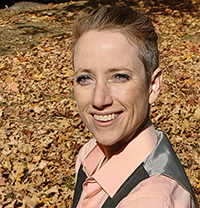
Julia Rose, MSW, LISW, serves as the president of the NASW Iowa Chapter. She is an Intimate Partner Violence Program Coordinator for the Veterans Health Administration.
What inspired you to serve as president of NASW’s Iowa Chapter?
I was interested in uplifting the social work profession when I was approached by the current Iowa Chapter president about opportunities on the board. This profession has taught me so much and helped me grow as a human. I felt this was an area I felt I could give back. NASW has always provided relevant training, advocated for the profession, and ensures the voice of social workers is at the table in law and policy discussions.
Do you have or have you had any other roles with the chapter?
I did my foundation practicum with NASW-Iowa, so this feels exciting to be active again later in my career.
What led to you becoming a social worker?
I wanted to work in mental health and my undergraduate degree is in psychology. When I was considering the direction of my masters, I learned about a local MSW program. As I explored the social work profession, I felt it was the path made for me. I didn’t just want to serve individuals within the confines of an office; My hope is to impact programs, families and communities.
NASW members, read the full Social Work Advocates magazine story.