By Alison Laurio
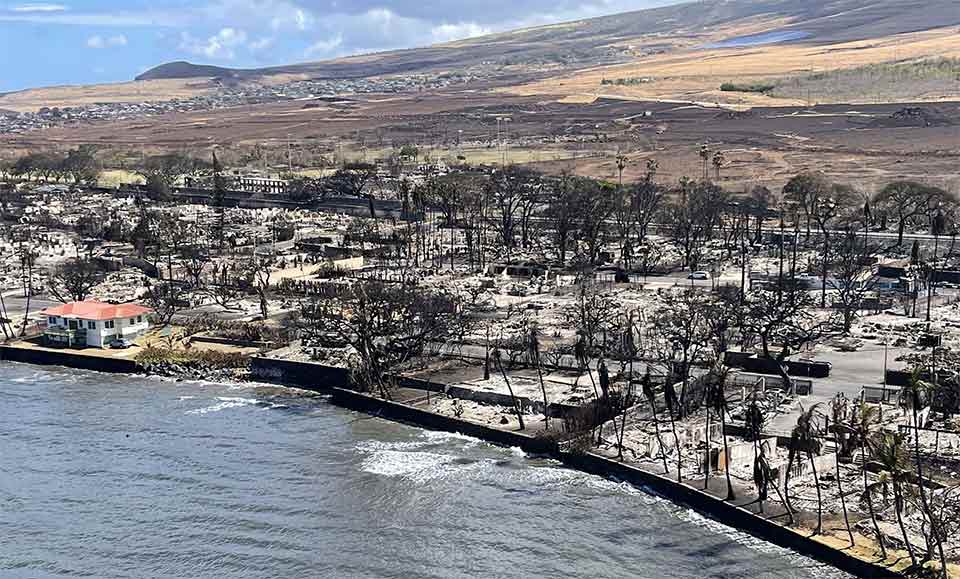
Wildfires on Hawaii’s Maui Island in August killed at least 114 people, forced tens of thousands of residents and tourists to evacuate, and devastated the historic resort city of Lahaina. Major news outlets on August 21 called it the “deadliest U.S. wildfire in more than 100 years.”
Amid the chaos, social workers stepped up when the American Red Cross asked them to help, said NASW Hawaii Executive Director Sonja Bigalke-Bannan, MSW, LCSW. When someone from the Red Cross asked her the range of problems and challenges social workers usually help with, Bigalke-Bannan said she replied: “Everything.” So, the Red Cross asked the chapter to take on a management-type role, including community engagement, staffing and shelters.
“Because the public has cultural conditions,” they asked for assistance from NASW, said Bigalke-Bannan, who then emailed the NASW Foundation, because “this clearly was not in our budget. They said, ‘Absolutely, yes. We’re there for you.’ We were so grateful for this help.”
Displaced survivors were staying in hotels and Airbnbs. Many others could not get around because they lost their cars and bikes. People sought various shelters, including gyms and community centers, Bigalke-Bannan said. Many homes burned, and the chapter tried to assess things, like if folks knew of friends or family members who needed medication, or if housing was needed.
Read more in the NASW Social Work Advocates magazine.