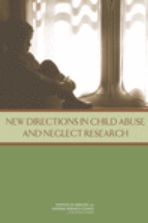
Report cover.
The Institute of Medicine (IOM) on September 12 released a new report, New Directions in Child Abuse and Neglect Research, that highlights advances made in understanding and treating child abuse and neglect over the past 20 years.
Joan Levy Zlotnik, director of NASW’s Social Work Policy Institute, was a member of the multi-disciplinary consensus committee that examined what has been learned from research since the IOM’s 1993 report on the same topic. Zlotnik also served on the panel that presented the findings to the public.
The report determined that child abuse and neglect is a public health problem by examining the scope of the problem and reviewing research on causes and consequences.
Over the past 20 years we have advanced our understanding of the cascading effects of abuse and neglect, impacting health, behavioral health, and cognitive functioning, with lifelong consequences for those who experience child abuse and neglect. We increased our knowledge of the importance of risk and protective factors and the importance of increasing our understanding of how culture and social stratification impact both abuse and neglect and service delivery outcomes.
The report highlights the advances in the development of both prevention and treatment interventions like evidence-based home visiting and parenting programs as well as trauma-informed therapies to strengthen children’s social and emotional well-being.
The committee’s recommendations cover research priorities to further our understanding of the separate and synergistic Impact of different types of abuse and neglect, especially to better address the more than 75 percent of cases that are for child neglect; to study how to implement evidence-based interventions in more settings; and to strengthen the federal role in supporting maltreatment research.
The Washington Post recently did an article on the IOM report.