By Peter Craig
If there was ever a perfect place to study immigration social work—especially in light of the ongoing influx of migrants into the U.S.—it would have to be Texas. So how are different social work schools there addressing this increasingly important subject area?
Special coursework on immigration would seem a natural, but the subject is already baked into the curricula at most Texas social work schools.
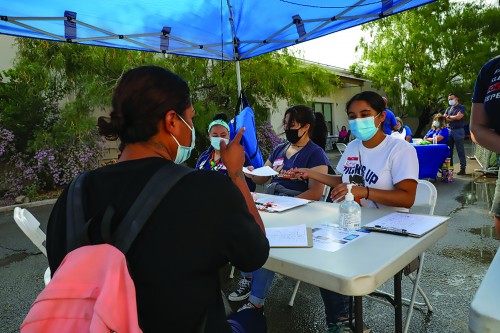
At the University of Texas at El Paso (UTEP), in an area that’s 85 percent Hispanic, the BSW course “Introduction to Social Work” includes a heavy dose of “U.S.-Mexico border realities,” says Eva M. Moya, interim chair and associate professor of the Department of Social Work—and “Social Work in the U.S.-Mexico Border Region” is a required course.
Moya’s own MSW class “Macro in Multicultural Practice” features “a lot of immigration/migration and human rights content,” she adds.
Associate professor Karina A. Gil, director of Hispanic-serving Our Lady of the Lake University’s Worden School of Social Service in San Antonio, says, “Immigration has been one of the issues that affect the Hispanic population, so it is embedded in our courses, from policy to case management.” The same goes for the School of Social Work at the University of Texas Rio Grande Valley (UTRGV), where Dr. Luis R. Torres-Hostos, founding dean and professor, calls both the region and school curricula binational. “In many of the courses in family therapy, individual therapy, etc., the assignments are focused on understanding the immigrant experience, particularly trauma—not only back in their countries of origin but on their way here as well.”
Read the full story in NASW’s Social Work Advocates magazine.