

By Darryl Webster, LICSW
May is Mental Health Awareness Month, a time dedicated to highlighting the importance of mental wellness. Social workers, counselors, therapists, and other mental health professionals lead that charge every single day.
But did you know recognition month has deep roots? Mental Health Awareness Month began in 1949, founded by Mental Health America, then known as the National Association for Mental Health. It was Clifford Whittingham Beers who built the organization after experiencing firsthand the mistreatment of those living with mental illness. His mission: to raise awareness, educate the public, and reduce the stigma surrounding mental illness. That mission is still alive today, and social workers are at its heart.
You Are a Hero
Before anything else, I want to say something that does not get said enough – social workers are heroes!
Not in a ceremonial way. In real life, every single day, we walk into impossible situations. You carry the weight of families in crisis, children at risk, systems that fail people, and communities in pain. You write the reports, attend the court hearings, make the home visits, and absorb the trauma of others, often without adequate support, supervision, or recognition.
You do this because you care. And that matters more than most people will ever know.
Breaking the Silence: My Story
I know this world personally. A graduate of Catholic University of America, I was honored with the Patricia Roberts Harris Fellowship for my community service work before beginning my career in child welfare in Washington, D.C. In 1991, fresh out of graduate school, I began my career as a frontline child welfare social worker in D.C., a city then known as the murder capital of the nation. The crack cocaine epidemic was devastating Black and brown children and families across our city. Home visits took me into neighborhoods that felt like battlegrounds, with gunfire, isolated violence hotspots, and families in desperate crisis.
I was a young man trying to manage all of this while also building a life. I had just married my high school sweetheart, welcomed our first child, and bought our first home, a family home in serious disrepair. Money was scarce. Stress was high. It was, as I now understand clinically, a perfect storm.
The allostatic load, the cumulative burden of chronic stress on the mind and body, exceeded what I could bear. And when that happens, normal anxiety can escalate into something far more serious. I developed generalized anxiety, social anxiety, panic attacks, agoraphobia, and clinical depression. I worked in a fog of mental illness that I told no one about. The stigma was real. I was committed to the children and families I served, but the weight of it all was nearly crushing.
In 1992, a colleague recruited me to join a specialized unit called Families Together, a program designed to work intensively with families for one month to keep children safely at home rather than removing them. Three years later, in 1995, Washington Post journalist Katherine Boo selected me to cover and was embedded with me in the field for seven months as I did my work. She witnessed my dedication to children and families up close, all while I was privately coping with mental illness, never letting it show. The story was nominated for a Pulitzer Prize.
All these years later, I remember the numbness, the dissociation, the fear, the avoidance, the shame. Still, I also remember the strength, the resilience, the courage, and the determination to educate myself and learn new tools that eventually rescued me from mental illness. Just a few years before retiring, I was honored as Maryland Social Worker of the Year, the state’s highest professional recognition.
That award meant everything, not just as a professional milestone but also as a reminder of how far the journey had come since those early days in the D.C. battleground. In 2024, I had the honor of returning to my alma mater, George Washington University, where I earned my undergraduate degree, to deliver a TEDx Talk sharing my personal experience with mental illness, recovery, and the work that grew from it.
The Reality Social Workers Face Today
My story from 1991 is not just history. Research tells us it is still happening right now, to social workers in the United States and around the world. According to available data (source at bottom of this article):
- 55 percent of social workers have experienced burnout that has led to anxiety and depression.
- 66 percent report feeling emotionally drained more than once a week.
- Nearly 47 percent report a direct decline in their mental health linked to work stress.
- 50 percent say they lack adequate supervision or mentoring.
- Social workers experience anxiety at rates significantly higher than the general population.
These are not statistics about weak people. These are statistics about heroes carrying too much for too long without the right tools.
Self-Care Is a Start, But It Is Not Enough
In fact, the National Association of Social Workers (NASW) Code of Ethics, updated in 2021, makes it clear:
“Professional self-care is paramount for competent and ethical social work practice. Professional demands, challenging workplace climates, and exposure to trauma warrant that social workers maintain personal and professional health, safety, and integrity.”
Self-care is not optional. It is an ethical obligation.
Many social workers are already practicing self-care. Therapy, supervision, exercise, and time with family. That is admirable and important. But self-care largely happens after the stress hits, after the difficult home visit, after the court hearing, after the crisis call.
What about in the moment? When anxiety rises in the middle of a session, or before a difficult conversation, or during a home visit in a neighborhood that reminds you of everything you carry?
That is the gap. And that is what led me to develop the Webster Calm Response Method.
Another Tool for Your Toolkit
The Webster Calm Response Method is built on a simple four-step framework: Label, Down Regulate, Allow, and Continue.
Label: Recognize the moment anxiety begins to escalate
Down Regulate: Downregulate the fear-based response that keeps the cycle going
Allow: Let uncomfortable feelings be present without fighting them
Continue: Move forward with your life while anxiety is present, weakening its hold over time
I did not learn this method in graduate school. I built it from bibliotherapy, clinical training, and my own lived experience fighting my way back from mental illness. I created it because I needed it, and because I knew others needed it too.
To the Social Worker Struggling in Silence
If you are a social worker struggling to cope with stress, anxiety, and depression, I recognize how hard it is. Very hard. Coming to work every day under a cloud of despair and anxiety, but showing up anyway and doing your best. What you are doing under the heavy burden of it all is worthy of deep respect. And you are worthy of being vulnerable enough to get help.
In my 30 years working in the D.C. government, I witnessed colleagues die by suicide, including the very supervisor who hand-picked me to help others. Untreated stress, anxiety, and depression can escalate into what the late suicidologist Edwin Shneidman called psychache, an unbearable psychological pain that people react to rather than respond to. That is why getting help is not optional. It is urgent.
If you or a colleague is in crisis, please call or text 988 (Suicide and Crisis Lifeline) anytime, day or night.
Do not suffer in silence.
Here is something the science tells us that I want you to hold onto: the brain is malleable. It changes with the environment and with the right support. The anxiety pathways that have been worn deep by years of chronic stress can be rewired. New responses can be learned. Recovery is not just possible, it is biological. You are not broken. You are adaptable.
Today, mental illness is more accepted. The stigma is not what it was 30 years ago. There are many new treatments that are highly effective. Help is available, and seeking it is not weakness. It is the bravest thing a helper can do.
You showed up for everyone else. Now show up for yourself.
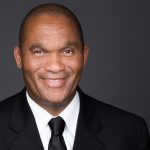 Darryl Webster, LICSW, is a Licensed Independent Clinical Social Worker with over 35 years of experience, founder of the Webster Anxiety and Stress Education Center, LLC, and creator of the Webster Calm Response Method. He is the author of I Thought I was Going Crazy: Overcoming Stress, Anxiety, and Depression. He has been featured on the Oprah Winfrey Show, CBS’s Week of Wishes, USA Today, and the Washington Post. He is a recipient of the Maryland Social Worker of the Year award and the Distinguished Government Award. Since retiring from government service, he has maintained a thriving private practice. Learn more at websteranxietystress.com.
Disclaimer: The National Association of Social Workers invites members to share their expertise and experiences through Member Voices. This blog was prepared by Daryl Webster in his personal capacity and does not necessarily reflect the view of the National Association of Social Workers.