
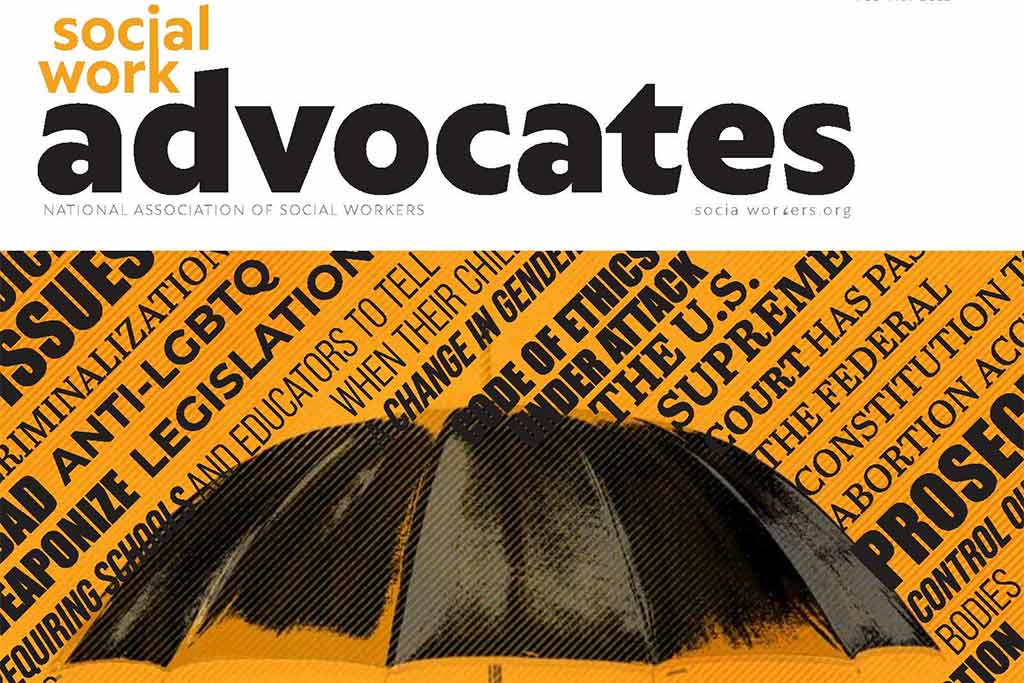
The February/March 2023 issue of Social Work Advocates
Top stories include:
Ethical Challenges: Profession Prepares to Protect Social Workers Amid Changing Political Landscape
Social workers across the nation are facing ethical dilemmas as state legislatures enact laws that conflict with NASW’s Code of Ethics, particularly laws related to abortion access and gender identity.

Diversity, Equity & Inclusion Training Should Serve as Foundation for Meaningful Action
Effective DEI trainings should be seen as opportunities for discussion and education as well as a starting point for further learning and action.
We Must Consider the Sleep Health of Our Clients
Over the course of my 10 years as a clinical social worker, I met a vast number of clients who complained of poor sleep. Curious about the intersection of sleep and mental health, I launched on a journey to further my education in this area.
NASW Celebrates Social Work Month and Welcomes a New CEO
Spring and Social Work Month are here, and those are good reasons to celebrate. Another reason is that NASW is welcoming a new CEO, Anthony Estreet, PhD, MBA, LCSW-C, who started his job in early February.
Photography Hobby Gives Clinical Social Worker Purpose and Hope
David LaPensee always travels with his camera.
Association News
- Featured Stories
- Practice
- Chapters
- Social Work in Action
- NASW Press
- NASW Foundation