Chiles v. Salazar 607 U. S. (2026) Decision summary decided March 31, 2026 in an 8–1 decision
By Ashlee Fox JD, MSW
Deputy General Counsel
National Association of Social Workers
What was This Case About?

Ashlee Fox, JD, MSW
Kaley Chiles is a Colorado-licensed mental health counselor who practices talk therapy only. Some of her minor clients came to her hoping to change their sexual orientation or gender identity, and she was willing to work toward those goals.
Colorado’s Minor Conversion Therapy Law, passed in 2019, prohibited licensed professionals from practicing conversion therapy with minors. It defined conversion therapy broadly to include any attempt — including through speech — to change a minor’s sexual orientation, gender identity, or gender expression.
Chiles challenged the law as applied to her talk therapy, arguing it violated her First Amendment right to free speech. She asked courts to block the law’s enforcement while the case proceeded. Both the trial court and the Tenth Circuit Court of Appeals denied her request, reasoning that the law mainly regulated professional conduct, not speech. Chiles appealed to the Supreme Court.
NASW’s Role
In August 2025, NASW and its Colorado Chapter joined the American Psychological Association, the American Psychiatric Association, and 11 other health organizations to file an amicus brief urging the Supreme Court to uphold Colorado’s law.
The brief argued that talk therapy is not just conversation, it is a medical treatment subject to decades of professional training, licensing requirements, and evidence-based standards. Treating talk therapy as speech protected by the First Amendment neglects the education and training needed for it to be safely and effectively conducted. Additionally, mental health institutions, such as NASW, have directly opposed conversion therapy because of its ineffective and harmful outcomes.
What Did the Supreme Court Decide?
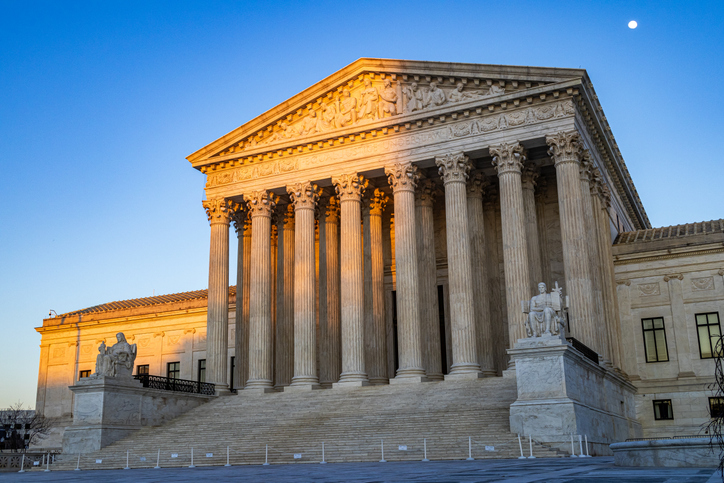
On March 31, 2026, in an 8–1 decision, the Supreme Court reversed the rulings of the lower courts and sided with Chiles. Writing for the majority, Justice Gorsuch held that Colorado’s law amounts to viewpoint discrimination. Here’s the core of the Supreme Court ruling:
- The Colorado law allowed a counselor to say, “I can help you explore your identity and accept your sexual orientation,” but prohibited that same counselor from saying “I can help you change your sexual orientation.” The Court decided that choosing which message is legally permitted is taking sides based on viewpoint.
- The Court found that calling therapy a “treatment” or “clinical modality” doesn’t strip it of the First Amendment protection.
- The Court concluded that licensed professionals do not have fewer free speech rights than anyone else. The Court expressly rejected the idea that “professional speech” can be regulated more freely.
- Colorado could not show that its law fit within any recognized historical tradition that would justify regulating this kind of speech at a lower standard.
The Court granted the preliminary injunction Chiles requested and sent the case back to lower courts. Colorado must now prove its law survives “strict scrutiny,” the highest and hardest legal standard to meet.
Justice Jackson’s Dissent
Justice Jackson was the sole dissenter, and her argument reflects the position NASW and allied health organizations advanced. Her dissent deserves careful attention because it articulates why this ruling is so troubling for the mental health profession.
Justice Jackson argued that the majority fundamentally misread the legal landscape by treating talk therapy like ordinary conversation. Her core point: when a licensed healthcare professional speaks to a patient as part of delivering medical care, that speech has always been subject to state regulation, and for good reason.
In her view, the key question was not simply whether Chiles’s words constitute “speech,” but whether Colorado was targeting that speech because of its message or restricting it incidentally as part of regulating a harmful medical treatment. She argued it was clearly the latter, and that the majority’s approach creates a dangerous and unworkable rule. Justice Jackson argued:
- States have always regulated medical professionals, including what they can and cannot do with patients.
- Talk therapy is a medical treatment. The fact that it is delivered through words rather than a scalpel or a prescription pad does not make it something different. As Justice Jackson put it, “treatments administered through words versus treatments administered through acts are not meaningfully different” when it comes to a state’s power to regulate harmful care.
- The majority’s ruling effectively creates a “free speech” loophole in healthcare regulation.
Under the majority’s logic, any harmful therapy delivered solely through talk could potentially be afforded First Amendment protection, making it much harder for states to protect patients from unscrupulous or incompetent providers.
NASW’s Commitment Going Forward
NASW is deeply disappointed by this decision. The Court’s ruling undermines decades of work by the mental health community to protect LGBTQIA+ youth from a practice that is not only ineffective, but demonstrably harmful. We stand firmly with Justice Jackson’s dissent and believe the majority got this wrong.
A court ruling does not change the science, and it does not change NASW’s values. NASW remains unequivocally opposed to conversion therapy in any form and will continue to:
- Advocate for LGBTQIA+ youth and the legal protections they deserve.
- Support state and federal legislative efforts to protect minors from harmful practices.
- Uphold evidence-based, affirming standards of care in social work practice.
- Challenge any effort to normalize or legitimize conversion therapy within professional settings.
Every person deserves care that is affirming, evidence-based, and rooted in dignity. Social workers remain on the front lines of this work, and NASW will continue to provide guidance and advocacy as this legal landscape evolves.
Ashlee Fox, JD, MSW, is Deputy General Counsel for the National Association of Social Workers.