Poverty rates for people in the LGBT community are higher than the national average, but for LGBT people of color economic insecurity is an even greater threat, according to a report released today by the Movement Advancement Project (MAP) and the Center for American Progress (CAP). The National Association of Social Workers (NASW) is a partner on the report.
The report, Paying an Unfair Price: The Financial Penalty for LGBT People of Color, said a number of factors keep LGBT people of color mired in poverty. These include laws that fail to protect LGBT people of color and their families from discrimination, laws that fail to recognize LGBT people of color and their families, and an educational system that has failed to address bullying, harassment, violence and other barriers that prevent them from getting an education.
“Disproportionate numbers of LGBT people of color live in places that lack any explicit state-level protections for LGBT people,” said Ineke Mushovic, executive director of the Movement Advancement Project. “This means that LGBT people of color face a high risk of economic harm from anti-LGBT laws. Based on the connection between poverty and an individual’s race or ethnicity, many LGBT people of color are less able to absorb the financial penalties created by anti-LGBT laws when compared to white LGBT people. It requires financial resources to try to mitigate the effects of these unfair laws, such as paying for an attorney to draw up a will or to obtain a second-parent adoption.”
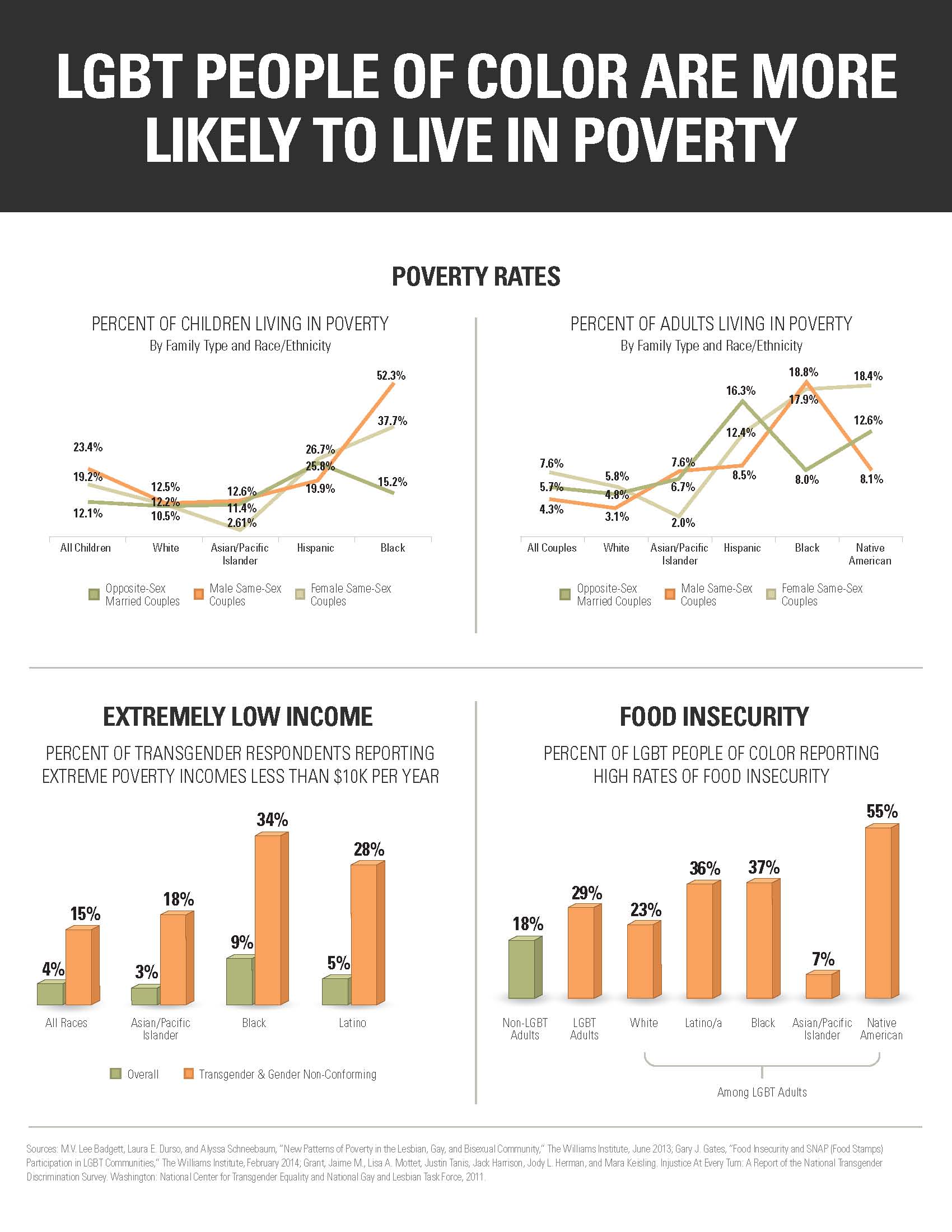 One in three LGBT people in the United States, an estimated three million adults, identify as people of color, the report said. These individuals and their families often experience a poverty rate far higher than the national average.
For instance, 52 percent of children raised by black male couples and 38 percent of children raised by black female couples live in poverty compared to 15.2 percent of children living with black opposite-sex couples, the report said.
The report underscores the need for the United States to address systemic issues that keep LGBT people, and particularly LGBT people of color, in poverty.
NASW is committed to equal rights for all, including members of the LGBT community. To learn more visit the NASW’s Diversity and Equity website or contact Evelyn Tomaszewski, NASW Senior Policy Associate on HIV/AIDS, LGBT Issues, and Violence Prevention at etomaszewski@naswdc.org.