
PRESS RELEASE:
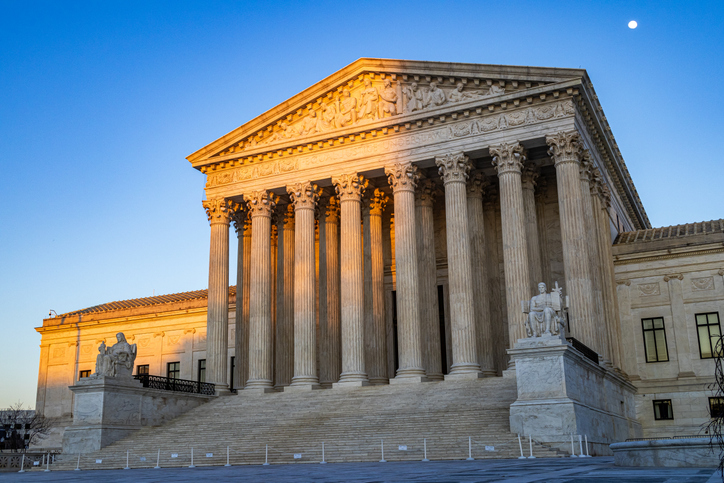
WASHINGTON, D.C. — The Bazelon Center for Mental Health Law, American Psychiatric Association, National Alliance on Mental Illness, National Association for Rural Mental Health, and National Association of Social Workers on June 28 released the following statement responding to the U.S. Supreme Court’s decision in Johnson v. Grants Pass:
Today the Supreme Court held that laws that criminalize sleeping in public when no safe and accessible shelter options are available are not cruel and unusual punishment. As we described in our amicus brief in this case, which Justice Sotomayor drew on in her dissent, this will have devastating consequences on the large and growing number of Americans experiencing homelessness, including people with mental health disabilities.
People with mental health disabilities are disproportionately injured in interactions with law enforcement, being 12 times more likely to experience police use of force and 16 times more likely to be killed by law enforcement. Additionally, criminal citations and incarceration impose serious burdens, increase financial instability, and create barriers to employment and housing.
Though the Supreme Court today removed a shield against cruel policies that criminalize nonviolent conduct associated with being homeless, it does not mean that such have to exist. Governments can – and many successfully have – put in place community-based services that meet the needs of everyone in the community, without resorting to criminal enforcement. As we described in our amicus (friend-of-the-court) brief, community-based housing and mental health services are a more effective and less expensive way to address homelessness than incarceration or hospitalization.
Research shows that scalable interventions, such as supportive housing, assertive community treatment, mobile crisis services, supported employment, and peer support services are proven solutions to homelessness and a more effective use of resources. By employing these community-based interventions, governments can address homelessness without resorting to criminal enforcement.
Everyone needs a safe place to sleep. As leading mental health organizations that work on behalf of people with mental health conditions across the country, we will continue to advocate for the housing and services that will truly end homelessness.
Read the U.S. Supreme Court Decision