 A number of protective factors associated with being American Indian exist; however, research shows that American Indians tend to experience higher rates of depressive symptoms than individuals of other racial or ethnic groups. Although prior research has examined sociocultural predictors of American Indian depression, less is known about the influence of familial functioning. This is particularly true for American Indian emerging adults who grew up in stepfamilies.
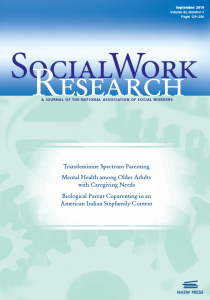
An article in a recent issue of the journal Social Work Research, published by NASW Press and Oxford University Press discussed a study that examined retrospective data from 203 American Indians raised in stepfamilies on whether perceived co-parenting between biological parents (post-stepfamily formation) was related to depression in emerging adulthood. Combining graded response and structural equation modeling, the authors of the article also found that retrospectively perceived negative co-parenting behaviors were significantly associated with depressive symptoms.
Findings in the study elucidated a particular risk for American Indians who perceive that their biological parents engage in poor co-parenting behaviors post–stepfamily formation. The findings also encouraged further research that examines associations between stepfamily functioning and mental health outcomes among American Indians.
***
The journal Social Work is a benefit of NASW membership. It is available online or, at a member’s request, in print. Children & Schools, Health & Social Work and Social Work Research are available by subscription at a discounted rate for NASW members, either online or in print. You can find out more about the journals and subscriptions at this link.