By Jesse Berney
“I was frustrated,” says Jan Dunn, LCSW. Working with members of the Osage nation and others in her rural Oklahoma community, Dunn saw “people who were motivated to change, to break their generational trauma.” They wanted to improve their lives but had too many barriers to access the services they needed. Practitioners were few and far between. Hourly workers couldn’t spare the time away from their jobs to drive an hour, sit for an hour of therapy, and then drive another hour to return to work.
“The need became apparent,” continues Dunn. “We can’t meet everyone where they’re at, but we can start with these communities.”
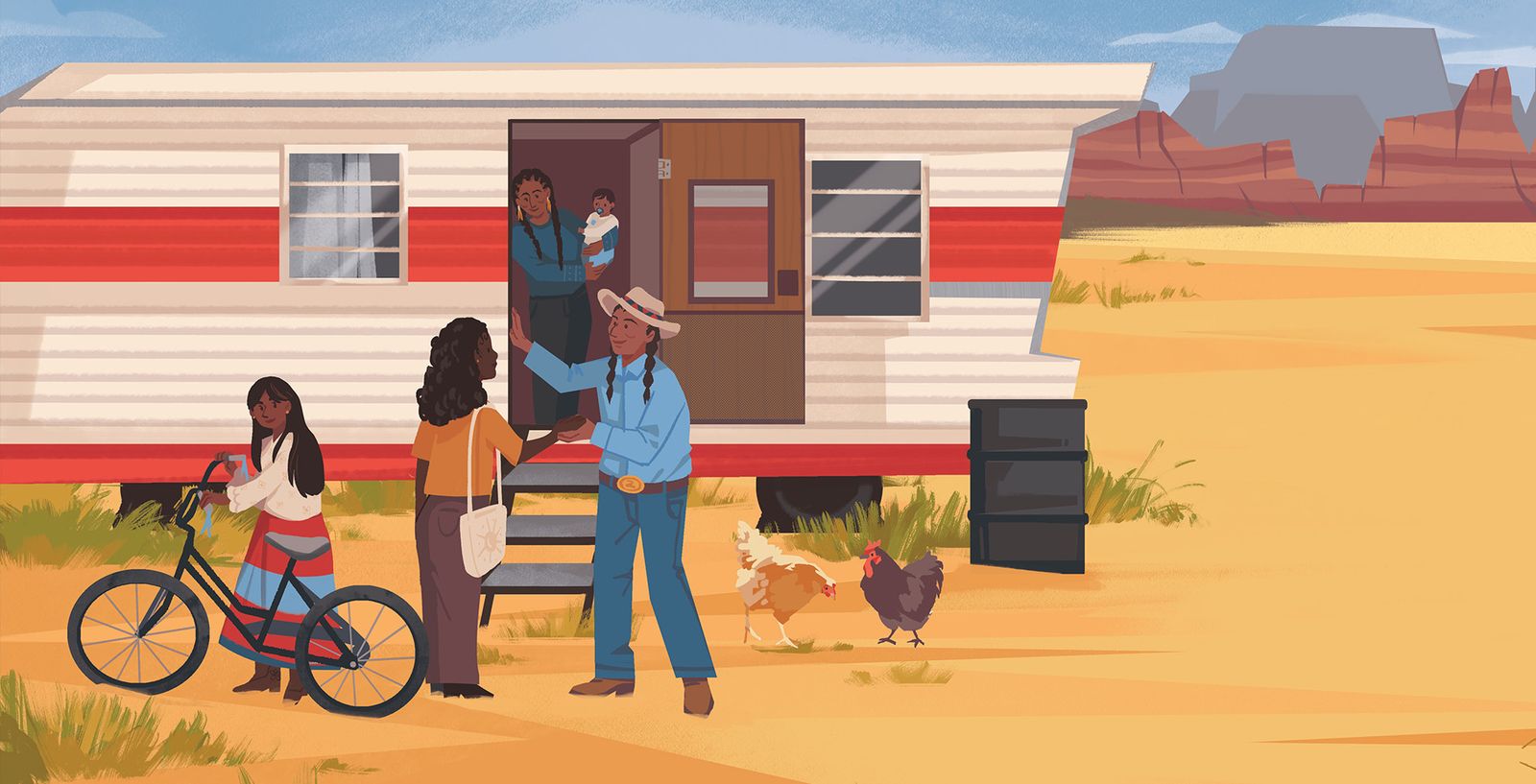
If they couldn’t come to therapy, maybe therapy could come to them. That’s when Dunn and her husband Andy came up with the idea for Feels on Wheels. They outfitted an Airstream trailer with comfortable furniture, warm lighting and decor, and everything they needed to take Dunn’s practice on the road. Now instead of navigating expensive office leases in multiple towns, Feels on Wheels takes Dunn where she’s needed, relying on the help of her community for space and resources. On Tuesdays and Thursdays, for example, she drives the Airstream to the parking lot of the First Assembly of God Church in the small town of Pawhuska, population approximately 3,000 people, bringing her skills to an area in desperate need of them.
Lack of Accessibility, Resources
Dunn’s strategy of taking her therapy on the road is a unique approach to one of the primary challenges facing social workers in rural areas. Accessibility where populations are spread thin and providers spread even thinner can make it impossible for people to get to the services they need. There are nearly twice as many social workers per capita in metropolitan areas than there are in rural ones. That means individual practitioners like Dunn face an outsized demand for their services in an environment that makes it more difficult to deliver them. Social workers in rural areas must often come up with creative solutions like hers to meet their clients where they are, not only physically, but socially and emotionally as well.
The lack of supportive services can make that work even more difficult. Jess Bowers, MSW, CAPSW, an associate professor in the Department of Sociology and Social Work at the University of Wisconsin Stevens Point, says there are shortages of resources like primary care physicians and dentists.
“People will drive two hours just to get to a methadone clinic for opioid treatment,” she says. Bowers points out that as people move away from rural areas—especially those with the kind of educational attainment necessary for social work— it is getting harder to recruit and retain social workers. “Providers face isolation and limited peer support,” she says. “They’re working with very few beds, and clinics and birthing centers are closing.”
Read the full story in the NASW Social Work Advocates magazine.