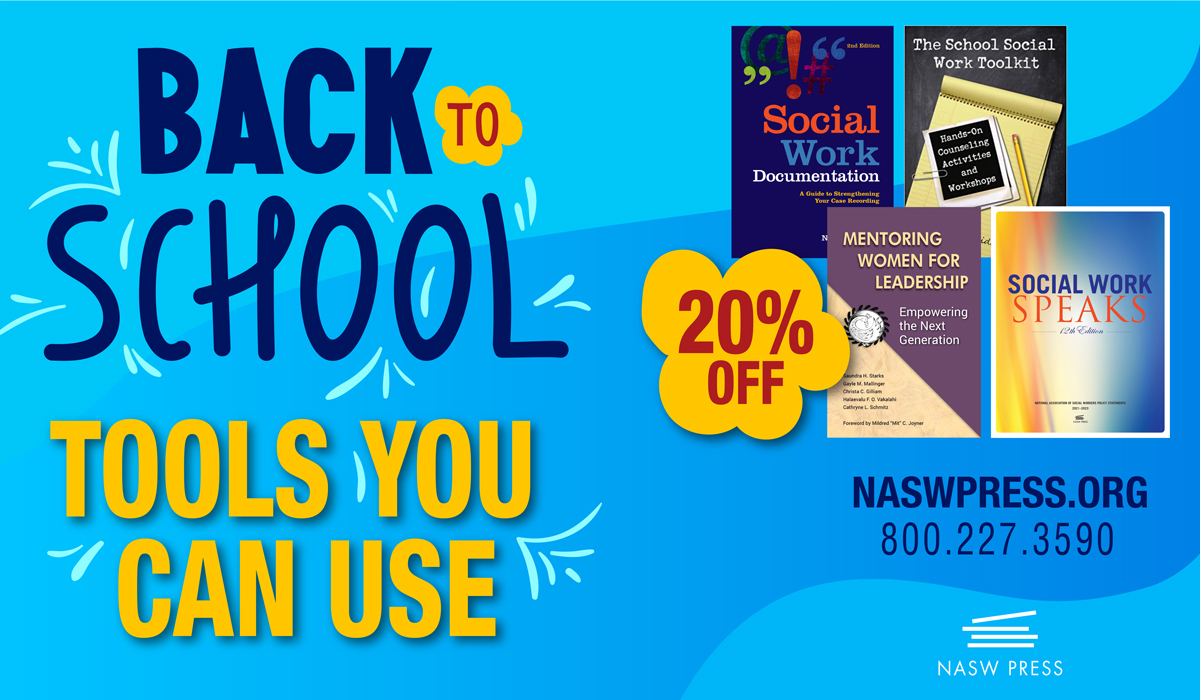
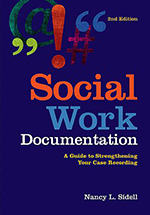
Social Work Documentation: A Guide to Strengthening Your Case Recording by Nancy L. Sidell
 Earn CEUs for reading this title! For more information, visit the Social Work Online CE Institute.
The second edition of Social Work Documentation: A Guide to Strengthening Your Case Recording is an update to Nancy L. Sidell’s 2011 book on the importance of developing effective social work documentation skills. The new edition aims to help practitioners build writing skills in a variety of settings. New materials include updates on current practice issues such as electronic case recording and trauma-informed documentation.
The School Social Work Toolkit by Alison Varianides
The School Social Work Toolkit is a “how to” resource for social workers, counselors, and mental health professionals in education. This book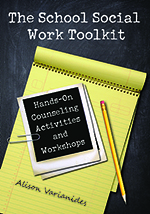 encompasses the direct practice part of the school social worker’s job as well as the administrative and policy-driven aspects such as child abuse reporting, disciplinary interventions, training, and dealing with teachers and parents.
The toolkit provides hands-on activities and workshops about various social work topics. In addition, the book contains a multitude of invaluable, modifiable sample forms and policy drafts for the school social worker—especially one who acts in an administrator role.
Mentoring Women for Leadership: Empowering the Next Generation by Saundra H. Starks, Gayle M. Mallinger, Christa C. Gilliam, Halaevalu F. O. Vakalahi, and Cathryne L. Schmitz
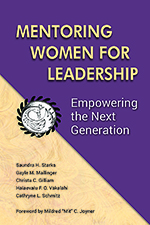 Women are no strangers to leadership. Across multiple disciplines, women have built and maintained organizations, created social justice movements, governed with compassion, and brought order where there was once chaos.
Female leaders understand that the oppression of all women creates cultural biases that are increased when merged with other identities, including race, ethnicity, religion, sexual orientation, age, disability, and class. These intersecting variables are even more noteworthy today, as we navigate a historic racial reckoning, political turmoil, and the post-pandemic “new normal.”
Social Work Speaks, 12th Edition: NASW Policy Statements 2021-2023
The 12th edition of Social Work Speaks is a comprehensive and unabridged collection of policies adopted and revised by the NASW Delegate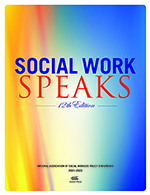 Assembly in 2020. The Delegate Assembly, NASW’s key policymaking body, meets every three years. The policy statements set the parameters for NASW’s positions and actions on a broad range of public policy and professional issues.
This edition includes updated policy statements on a wide range of topics, including rural social work, voter rights and participation, mental health, hospice care, juvenile justice, foster care and adoption, and the rights of indigenous peoples. Social Work Speaks is a reference tool that represents the collective thinking of thousands of social workers across all fields of practice.
____________________________________
For more information about all NASW Press titles, including books, eBooks, CEU books, reference works, journals, brochures, and standards, visit the NASW Press website. If you have questions please send an email to NASWPress@BrightKey.net or call 1-800-227-3590.