
By Diana Ling, MA and Makeba Royall, LCSW
September is Fetal Alcohol Spectrum Disorders (FASD) Awareness Month. This annual observance is a reminder of the pivotal role social workers play in both preventing FASDs and supporting individuals and families living with FASDs. As the largest providers of mental and behavioral health services, practicing in the widest variety of settings compared to other health professionals, social workers are especially well positioned to implement alcohol screening, brief intervention and referral to treatment (SBIRT), an effective tool in FASD prevention.
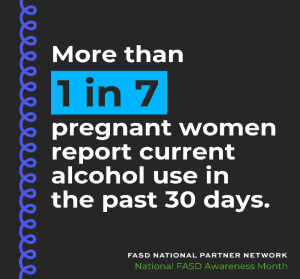
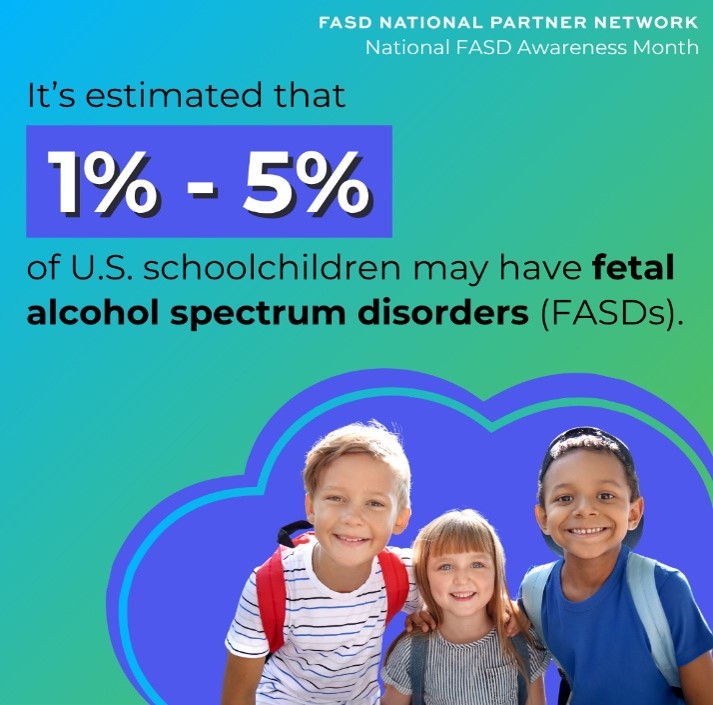 FASDs are a group of diagnosable medical conditions that can occur in a person who was exposed to alcohol before birth. FASDs are lifelong and can include mental health conditions, learning disabilities, and physical manifestations such as heart defects and visual impairments. It is estimated that as many as 1 in 20 U.S. schoolchildren may have FASDs. In addition, more than one in seven pregnant women report drinking alcohol, and nearly one in 20 report binge drinking in the past 30 days.
In honor of FASD Awareness Month, learn about implementing SBIRT for all adults and how to discuss alcohol and pregnancy with them. Alcohol screening and brief intervention (SBI) is recommended by the U.S. Preventive Services Task Force and endorsed by leading medical professional organizations, including the American Academy of Family Physicians and American Academy of Pediatrics, as well as the Centers for Disease Control and Prevention (CDC).
Three Things to Know About Prenatal Alcohol Exposure and Alcohol SBIRT
- Alcohol use during pregnancy is a leading preventable cause of birth defects and neurodevelopmental abnormalities in the U.S. FASDs are preventable if a developing baby is not exposed to alcohol before birth.
- It is impossible to know which babies will be affected by alcohol use during pregnancy, and no definite test for FASDs is available. Therefore, there is no known safe amount, no safe time, and no safe type of alcohol use during pregnancy.
- Alcohol SBI works: In a 2021 study, 83% of healthcare providers who conducted SBI said they saw positive behavior change in patients after conducting SBI with them. In addition, a brief screening can be conducted using as little as one question, followed by a short conversation with those who are drinking at or above risky levels, and referral to treatment when appropriate.
 While a recent NASW/UT Austin survey of more than 2,000 social workers found that more than 70 percent of those in settings that serve women of reproductive age have a protocol for SBIRT, it also found that social workers would like more confidence in delivering SBIRT to address alcohol and other substance use.
To support social work training in SBIRT and FASDs, NASW and NASW Foundation have joined the Health Behavior Research and Training Institute (HBRT) at UT Austin in the FASD National Partner Network (NPN), a national, cross-discipline initiative of the CDC. The NPN is the only network of its kind that includes social work at the center of prevention practice, along with colleagues in family medicine, pediatrics, obstetrics-gynecology, nursing, and medical assisting. To learn more about this opportunity and join our NPN network, please visit our Partner interest page. See the additional resources listed below to find out more about SBIRT and FASDs.
Learn More
How Social Workers Can Use SBIRT to Prevent Alcohol-Exposed Pregnancy
(HBRT, NASW Foundation and FASD United)
What Social Workers Need to Know about FASD (FASD United)
Practice Perspectives: Screening, Brief Intervention, and Referral to Treatment (SBIRT) for Risky Alcohol and Other Substance Use (HBRT, NASW, NASW Foundation)
Alcohol Use During Pregnancy and Fetal Alcohol Spectrum Disorders (American Academy of Family Physicians)
Video Series: Lived Experiences with Fetal Alcohol Spectrum Disorders (CDC)
Drink Size Badge Card (Health Behavior Research and Training Institute, NASW Foundation, ORAU and CDC)
SBIRT Pocket Card (Health Behavior Research and Training Institute, NASW Foundation, ORAU and CDC)
The Healthcare Professional’s Core Resource on Alcohol (NIAAA, CEs available)
Diana Ling, MA is Senior Program Manager for the Health Behavior Research and Training Institute, The University of Texas at Austin (UT Austin). School of Social Work; and Makeba Royall, LCSW is Senior Practice Associate, Behavioral Health, National Association of Social Workers.
This initiative, Engaging Social Workers in Preventing Alcohol- and Other Substance-Exposed Pregnancies, is supported by the Centers for Disease Control and Prevention of the U.S. Department of Health and Human Services as part of a financial assistance award totaling $1,222,292 with 100 percent funded by CDC/HHS. The contents are those of the authors and do not necessarily represent the official views of, nor an endorsement by, CDC/HHS, or the U.S. Government.