 People who are transgender are becoming more visible in American society.
Transgender activist and actress Laverne Cox, who appears on the hit Netflix series “Orange is the New Black,” made the cover of Time. And Chaz Bono, the only child of well known entertainers Sonny and Cher, made an Oprah Winfrey Network documentary about his transition from female to male.
However, the National Association of Social Workers (NASW) joined other organizations to partner on two reports released today that show that despite this increased visibility, people who are transgender still face significant barriers to safety, health and well-being.
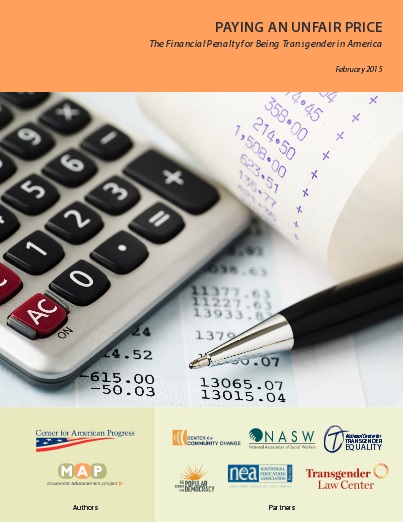
The two reports, “Understanding Issues Facing Transgender Americans” and “Paying an Unfair Price: The Financial Penalty for Being Transgender in America,” detail widespread discrimination and inequities the transgender population faces. These include higher rates of poverty, violence, and poor health, and limited job opportunities.
The reports are co-authored by the Movement Advancement Project (MAP), the Center for American Progress, the National Center for Transgender Equality (NCTE), and the Transgender Law Center. NASW, the Center for Community Change, Center for Popular Democracy, GLAAD, and the National Education Association are partners on the reports.
“Transgender Americans are experiencing a unique moment in history, as growing visibility leads to greater familiarity and understanding of transgender lives,” said Ineke Mushovic, executive director of MAP. “At the same time, many transgender people, particularly transgender women and transgender people of color, still face enormous barriers to their safety, health, and well-being.”
Please share the report via social media (use #trans on Twitter). And to learn more about what NASW is doing to improve the welfare of people from the LGBTQ community contact NASW Social Justic eand Human Rights Manager Mel Wilson at mwilson@naswdc.org or Evelyn Tomaszewski, NASW’s senior policy associate for HIV/AIDS, LGBT issues and violence prevention, at ETomaszewski@naswdc.org.